Happiful Aimée Grant Cumberbatch Happiful Aimée Grant Cumberbatch

Cemeteries: Could they become a place where life and death exist in harmony?

Aimée Grant Cumberbatch explores the cemeteries full of life, and uncovers what these spaces can teach us about grief, bereavement and our place in the world.

Behind my house, there are dead people. Sounds creepy, right? Depending on your perspective, it is. My house backs on to a cemetery. To be fair, as cemeteries go, it’s not that creepy. Like others up and down the UK, it’s a haven for nature. In the spring and summer, wildflowers, like bird’s-foot-trefoil and common mallow, mingle with grasses, left to grow long. The sounds are the noisy squawks of parakeets, the cackling call of green woodpeckers, the shushing of those grasses or the hum of chatty crickets hiding within.

Not only can cemeteries provide crucial wildlife habitats in urban areas, and access to green spaces for the humans that live nearby, they are also uniquely contemplative spaces that promote wellbeing in a variety of ways. With awareness of the environmental impact of human death fuelling demand for eco-friendly burials, people are increasingly alive to the idea of cemeteries as spaces for far more than neat rows of graves and grass, only visited by mourners.

Three cemeteries that are wonderful examples of this are Ford Park Cemetery in Plymouth, Nunhead Cemetery in south London, and Arnos Vale Cemetery in Bristol. Their histories mirror those of many Victorian cemeteries, which became accidental wildlife refuges when their owners’ profits dried up.

During the early 1800s, churchyards, where burials traditionally took place, were becoming overcrowded and unsanitary. So from 1832 cemeteries, starting with London’s ‘Magnificent Seven’, were created around the country to provide new places for burials. In line with the Victorian experience of death as ever-present, thanks to high mortality rates especially among children, these cemeteries were conceived as spaces for the living and the dead.

Image: Jacob Amson

For wealthy Victorians, they were also places to display financial power, leading to ornate tombs or statues atop graves. Families would come to visit graves, but also to picnic and admire trees or botanical specimens. Cemeteries were intended to be spaces of beauty, leisure, and learning, as well as mourning.

Once the cemeteries began filling up, the profits for the private companies that ran them dwindled, and many were eventually left to become overgrown and unkempt. At Nunhead, the period of neglect helped usher in wildlife, but for those charged with its maintenance in the 21st century, undoing some of its wildness is essential.

Friends of Nunhead Cemetery (FONC) co-ordinator Jeff Hart explains how the cemetery’s years of neglect saw ash and sycamore trees self-seed unchecked. Two of the commonest trees in the cemetery, they are not always the most useful for wildlife. Part of the efforts of FONC, who work to conserve the cemetery, is to cut back and thin out these species, giving ground to slower growing varieties like beech, oak, hornbeam, and birch.

It also allows for the creation of open spaces, ensuring the site has a diversity of habitat as well as trees, with areas of wetland, scrub, grassland, and even a hazel glade. These benefit a host of different wildlife, including 120 species of funghi, 60 species of bird, and 207 types of insect – one of which has never been recorded anywhere else.

Image: Annie Spratt

There are benefits for human visitors, too – FONC keeps a section of the cemetery clear of tall trees to ensure the view across to St Paul’s Cathedral is preserved. The different areas provide interest, and FONC also includes botanical specimens that recall the common Victorian planting style.

Striking a balance between the cemetery’s present and its past, and its visitors – human and non-human – is a key theme in the management of all three cemeteries. This includes balancing the sometimes conflicting expectations of what a cemetery should look like. One person’s unmown, wildlife-friendly grass is another’s unkempt and seemingly unmanaged space.

At all three cemeteries, there are efforts to usher visitors and mourners into the journey of managing wildlife. Arnos Vale uses signage to explain its work, and will create a mown path for anyone wishing to visit a grave in the cemetery’s meadow-cut areas of longer grass. It’s important visitors know any seeming untidiness is by design, and serves a purpose.

Arnos Vale and Ford Park are active cemeteries, and offer plots in more traditionally-managed areas – think close-cut grass and neat rows of headstones. But they also have wilder burial areas. Here, mourners bury their loved one in a coffin that won’t harm the environment as it biodegrades, and, instead of headstones, might lay a small wooden plaque or plant a native tree like hawthorn – beloved by butterflies and moths. This opportunity to situate death within wild spaces can offer the chance to view it as part of something bigger, part of the circle of life.

Image: Griffin Quin

But even for those who aren’t mourning, visits to cemeteries which are actively managed as spaces of both life and death present opportunities to adapt our relationship with mortality in helpful ways. Or at least just open up the subject to conversation, and thereby make it less taboo.

Janine Marriott, public engagement manager at Arnos Vale cemetery says: “A cemetery feels like a very natural space to talk about [these things]. There’s a lot of evidence to suggest that if you are comfortable talking about your own death and also make your relatives aware of your end-of-life choices, it makes your passing easier for everyone. People can be a bit superstitious, but talking about death definitely doesn’t kill you.”

Janine also notes the tranquillity of cemeteries is key. “At night, you get a lot fewer people using a cemetery [than a park]. So badgers and foxes can roam freely without being disturbed. Also, most historic cemeteries were built before the age of electricity. That means there’s very little light on site. They are great dark spaces for wildlife.” This tranquillity is good for humans, too: “They’re quite contemplative spaces. Unlike a park, you haven’t generally got people kicking a football around,” says Janine.

What can make cemeteries an especially vital wellbeing resource is their accessibility. Ford Park, Arnos Vale, and Nunhead are all located in urban areas, offering a green space for those living nearby. Like other green spaces, they can also help improve air quality, but may be especially effective as they often contain many mature trees. These have been found to clean air more efficiently than younger ones. Janine explains that Arnos Vale is located between the A37 and the A4, so the cemetery “is a really important part of the green lungs”. Even if nearby residents never visit a cemetery, they’ll still get a health and wellbeing boost.

But if they do visit, the wellbeing benefits are manifold. These cemeteries are often sweeping spaces – Nunhead is 52 acres, Arnos Vale is 45, and Ford Park is 32.5. But even when small, like the cemetery behind my house, they are places in which to lose yourself, whether in the stories that the gravestones tell, the architectural details of another time, the buzz of pollinating insects around wildflowers, the sunlight through leaves and branches, or even just in the atmosphere of these unique spaces.

This piece was published in Happiful magazine, issue 77 and can be found on the Happiful website.

Read More
gal-dem Aimée Grant Cumberbatch gal-dem Aimée Grant Cumberbatch

Wanderthirst: bringing my whole self back home to Barbados

In turquoise Caribbean seas, I found myself shifting and evolving – like the Barbados of my childhood.

In turquoise Caribbean seas, I found myself shifting and evolving – like the Barbados of my childhood.

I’m a big fan of swimming outdoors. I love lidos, lakes, rivers, the ponds at Hampstead Heath and Beckenham, the tidal pool at Margate’s Walpole Bay. But the sea in Barbados is my original swim. I learned there as a child, living in Prospect, St. James when I was aged four to six. If you have swum in tranquil Caribbean seas, then you’ll know it’s like swimming in liquid azure and turquoise silk. The water welcomes you, ushers you in. The sand is cushiony, its colour the soft, washed-out pink of finely crushed coral. It’s not perfect; like any sea, there are things in there that will scrape and sting you. But, if I had to be stung or scraped in any sea, make it Caribbean. 

I also love swimming in Barbados’ less welcoming beaches and sitting in the rockpools at Bathsheba, getting rolled in the surf at the Crane. What my many swims on a recent trip reminded me is that I know exactly how to be in the sea. I know how to float on the surface (clenching your bum cheeks is key) and listen to the shimmering sound of seawater stirring up sand. I know to stand sideways in the face of a daunting wave or, if it’s really big, go under it to emerge through it. I know how to catch the tide with no board, just my body, and let it sweep me into shore. I have muscle memory for the sea. 

“The sand is cushiony, its colour the soft, washed-out pink of finely crushed coral”

Before I set off on this trip, my first since 2017, I worried I’d feel a sense of cultural dislocation while there; a hyperawareness of my Britishness after several years away. Instead, where I expected severance, I felt connected. The trip reminded my sister and I of our Bajanness, leading to moments of joy in self-recognition. For her, it was the sun-soaked chattel house colours that crop up in her design work. For me, it was my taste for intense flavours and sweetness in foods like Bajan curry or sugar cakes. And, for both of us, its rhythms – the sound of tree frogs after 6pm, the insect-like buzz of wind-winnowed kite strings, the cu-coo-cu-coo of Bajan wood doves.

Barbados is often presented as a place of two halves. There’s its Platinum coast, the foundation on which the country’s tourism industry rests, home to the kind of beaches that you might mistake for screensavers. But there’s much more to the west coast than its beauty. Resorts and private villas rub shoulders along much of it, yet you can still see the modest homes of local Bajans every now and then. And, no matter how exclusive a resort may seem, the beaches they’re built on are public – in theory. In practice, thanks to overdevelopment of the coastline, this freedom is under threat. During the trip, I saw how stretches of shoreline had become segmented and impassable in places, as coastal erosion brings the water right up to the walls of private beachfront properties. It’s a reminder of how colonialism not only echoes down centuries, but evolves.


Then there’s the east coast. Here waves don’t lap but smack, pounding shores and rock faces with a rage intensified across thousands of miles of open ocean. There are rockpools, towering remnants of ancient coral reefs, wind-battered palm trees. As you might expect, it’s home to far fewer resorts. Both east and west coastlines are natural wonders with hidden depths, but they’re so often reduced to their user-friendliness – the one where it’s easy to swim and the one where it isn’t. Sometimes, when hearing or reading about Barbados, you could be forgiven for thinking it is nothing but a giant sandbar made of two coastlines zipped up back to back, despite the fact there’s a whole south coast too. 

As I explored the island in a tiny hire car with my boyfriend, rumbling over potholes and braking for troops of monkeys, I was reminded of how overly simplistic this idea of Barbados is. There is so much that exists in between the island’s coasts. There are gullies full of the bearded fig trees that inspired the island’s name. There are the rum shops in which gassin’ is elevated to a fine art and where I came to understand my grandfather’s love of talking a lot about not very much. Then there’s the plantation houses and sugar mills – the scars that bear witness to the history of colonialism and enslavement on the island. 

There was something in the oversimplification of Barbados, in the way it’s put into neat packages for a certain audience, that really resonated with me. I’m mixed race, so being carved up into chunks comes with the territory. Parcelling myself up neatly is something I’ve consciously been trying to do less of lately. But in Barbados I realised I also place binaries on myself in so many other ways. I’m always sorting myself into good – when I’m productive, tidy, organised, energetic – and bad – when I’m tired for no reason, can’t be bothered, running late, eating three Terry’s Chocolate Oranges in a week.

I’ve also done this on a grander level, with the self I felt I left in Barbados when I moved back to the UK aged six. As a frequently sad, socially awkward, shy, self-conscious adult, I looked back on my Barbados self with wonder and envy. I wished I had her confidence, her ability to make instant friends, her carefree nature and, yes, her multi-coloured foam sandals. The fact that my parents split up when we lived in Barbados only emphasised the gap between the two me’s in my mind. Shortly after their split, my sister and I returned to the UK with our mum, and my dad stayed in Barbados. Needless to say, under-six me hadn’t known sadness like it. 

“There was something in the oversimplification of Barbados, in the way it’s put into neat packages for a certain audience, that really resonated with me”

Leaving Barbados represented the loss of so many things – one of them that sunny younger self. But feeling that muscle memory in the water, remembering those sea skills I’d learned in Barbados as a small child, reminded me that she’s still in there. Even though life’s brutal lessons – grief, sadness, mental health struggles – have humbled me, I still have that strength. Only now, I channel it differently. I saw this reflected in Barbados too. Coastlines are shifting and hotels are built, knocked down and rebuilt endlessly. Barbados now has fields full of solar panels and there’s a new Chefette mega playground, but it is still Barbados. In the same way, in the wake of both gentle and devastating waves, I too shift and evolve. But I’m still me.

Barbados is not two coastlines put back to back. It’s not half beautiful beaches, half rugged shoreline. It’s a patchwork, rich and wonderful precisely because of its contrasts. And it’s the same for me. I’m not good or bad, half this or half that. I’m not rupture, I’m not disjointed scraps, I have sewn myself back together many times. I’m Bajan, I’m British, I’m mixed, I’m a whole me.

Highlights

  • All Barbados beaches are public, look out for signposted access points along the coast roads.

  • Grab a table by the sea for lunch or late afternoon drinks at beach bar La Cabane, you can spot turtles popping their heads up out of the surf. 

  • Head up to the northernmost point of the island at the Animal Flower Cave for wild (in both senses of the word) scenery. Go inside the caves for a fee or head to the clifftop viewpoints to see mighty ocean waves crashing into coral rock faces for free. 

  • If you have even the vaguest interest in plants, you must visit at least one of the island’s gardens. Andromeda Botanic Gardens is full of hummingbirds, butterflies and hundreds of different tropical plants.It’s free for Royal Horticultural Society members. Welchman Hall Gully offers a shady forest walk and a snapshot of Barbados’ botanical history. Tropical Gardens is the place to see orchids in all their weird and wonderful glory. The Flower Forest gives you the best of both tropical flowers and trees, and Hunte’s Gardens is a peaceful plant-filled spot whose owner Anthony is always up for a chat.

  • Chefette! Fun fact: there are no McDonald’s in Barbados. Why? Because Chefette exists. Fill up on broasted chicken and rotis while you can because this homegrown fast food chain is only found on the island. 

  • Catamaran cruises aren’t cheap but they’re worth it. You can snorkel over shipwrecks, spot turtles and starfish and cruise along the coast with unlimited rum punch on tap. Give Cool Runnings a try.

  • Barbados is home to some incredibly talented potters and ceramic artists. There’s the legendary Earthworks, with its signature splashes of colour, but be sure to check out Hamiltons Pottery for experimental pieces (he’s recently been working with ash from the 2021 explosion of nearby St Vincent’s La Soufrière volcano) and Highland Pottery for striking vases, mugs and traditional Bajan monkey pots (used to cool water).

Useful information

  • Exploring Barbados is easiest by hire car but the busy bus network is also a brilliant way to get around. There’s the blue government buses which are your more typical bus experience. Then there’s the yellow dub buses, which can be hailed pretty much anywhere along the road, screech along at breakneck speed and feature sound systems that ensure they’re often heard before they’re seen. It’s an experience worth having at least once. 

  • Speightstown is a great place to stay if your budget doesn’t stretch to car hire for any or all of your trip. It’s relatively quiet, easy to travel to and from by bus and you’ll be within walking distance of the supermarket, restaurants, beach bars and shops. Plus Speightstown beaches have some of the clearest water on the west coast.

  • You can buy fresh coconut water as well as mangoes and avocados (depending on the season) from roadside stalls. It’s a great way to stock up on fresh fruit on the go. 

  • It used to be that Barbados’ dry season ran from December to April and, while this is largely still the case, the climate crisis is blurring these kinds of distinctions. Other times of year tend to be rainier, but luckily this isn’t British drizzle, we’re talking dramatic tropical thunderstorms that generally arrive and depart rapidly, so don’t be dissuaded.  

Originally published on gal-dem.com.

Read More
Aimée Grant Cumberbatch Aimée Grant Cumberbatch

Why Riches Is So Much More Than A Love Letter To London

Riches creator Abby Ajayi on Black capitalism, balancing injustice with joy, and putting Yoruba on our screens.
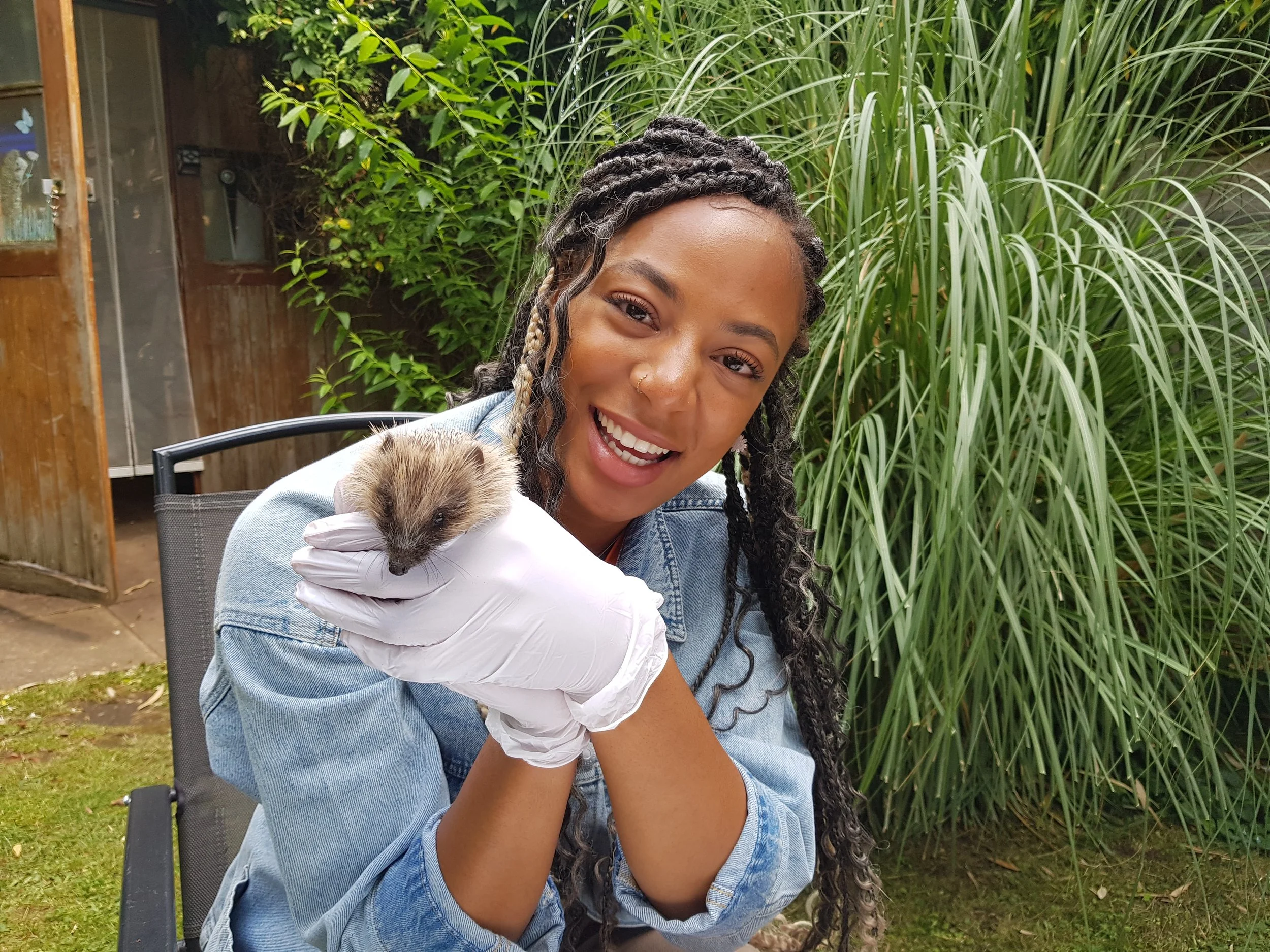

Show creator Abby Ajayi on Black capitalism, balancing injustice with joy, and putting Yoruba on our screens.

TVX’s Riches is a show with the dial turned up. The buildings are high rise, the clothes are high fashion, the shoes are high heels, the conflict is high drama. With creator Abby Ajayi citing Dynasty and Dallas as influences on the show, it’s small wonder that Riches is so delightfully OTT. Ajayi is a Londoner who moved to L.A. in search of the sorts of opportunities that are lacking for Black screenwriters back home. Having since worked on Shondaland hits like How To Get Away With Murder and Inventing Anna, she has form in the bold, big-budget U.S. dramas that Riches references. But the showrunner from Edmonton is also no stranger to homegrown fare — she cut her teeth on EastEnders, Holby City and Hollyoaks, as well as CBBC classic and social media-beloved Tracy Beaker. Riches feels like a culmination of these two strands of Ajayi’s career, melding the high-production values and the self-assuredness of prestige U.S. TV, with the unique humour and keeping-it-realness of British telly.

Riches follows the Richards, a family at war, vying for control of a business — Flair & Glory. Ajayi explains that she has “always” wanted to do a family business show. As well as watching them, she’s also fascinated by the drama that surrounds real-life family brands and businesses “whether it's the Beckhams, the Kardashians, the Guccis, the Hiltons, the Murdochs,” she tells me. “It's not always about wealth, but it's about how once you've got money in the mix with blood, the stakes are so high.”

In Riches, the stakes are even higher because this is a family business bound up with Black identity. Flair & Glory is a cosmetics and hair care company, a choice that Ajayi made intentionally. She says: “The hair business is incredibly lucrative, but often Black people are cut out of the actual profit participation. Also hair is incredibly politicised and there's so much judgement about how Black men and Black women have their hair.”

Greenacre for ITV

Ajayi explains that, as a cosmetics and hair care company, Flair & Glory gave her the chance to show Black hair on screen “in all its textures, lengths, colours.” The year before she joined How To Get Away With Murder as a writer, Ajayi watched the now-iconic moment when Viola Davis as Annalise removes her wig. Through Riches, Ajayi says she’s aiming to bring similarly real moments to British TV: “I wanted that. Yes, a Black woman has changed her wig. We can just keep moving. It’s life, it happens, wigs and all. Big secret.”

In its portrayal of a wildly successful Black hair care company, Riches also touches on debates around Black capitalism that are very current. In the wake of the Black Lives Matter protests in summer 2020, there were calls to buy from Black-owned businesses, listicles from news outlets directing readers to buy Black, and initiatives like Black Pound Day launched. But such efforts have prompted criticism from those who wonder whether Black liberation can ever rest within a system that is inherently exploitative. Ajayi describes these issues as “interesting, thorny, and complex.” She sums up the debate: “As we talk about endgame capitalism, you're like, do you beat them? Do you join them? Do you stand on the outside and say it's crap, but still worry about your own future?”

The show explores ethical issues in several episodes, Ajayi tells me, which question: “whether the brand[‘s] success in a capitalist sense [is] at the expense of the Black consumer.” And also once success is attained, “Do you sell to a big multinational conglomerate that pays tax nowhere, that has none of the historical emotional connection to the Black community?” There’s a lot to unpack, including whether these issues are, as Ajayi puts it, purposefully “weaponised against emerging groups, against emerging countries. So they're finally getting their seat at the table, and then the rules have moved.”

Greenacre for ITV

Those who are after escapism — don’t be afraid, you’ll still find it here. The show is by no means didactic, it’s a drama first and foremost. “Those conversations are subtextual to the character stories, the emotional stories. But I think it's really important to frame them and explore them through the lens of what that means to Black people,” Ajayi says.

While the Richards have the kind of generational wealth that many Black Brits lack, Ajayi notes that: “money can buy you all kinds of things, but happiness isn't necessarily on the table and it doesn't mean you outrun racism.” In episode one alone, there are gestures towards the inequality embedded in the systems of healthcare, law, and policing that no Black British person can buy their way out of. Ajayi explains that she wanted to bring the depth of the Black British experience to life, which meant balancing injustice with joy. It also meant looking at what it means to process moments that are at once devastating and quotidian. She explains: “It doesn't end you. We navigate that stuff. Sometimes you tackle it directly and at other times you let it go, because [otherwise] you'd be fighting all the time.”

“Not only are we going to show the London we know in a way we've always experienced it — which is inclusive and diverse and vibrant and contradictory and joyful — in front of the camera, but also mirror that behind the scenes as well.”

As well as giving Ajayi the opportunity to air parts of the Black British experience which are rarely highlighted on British TV, Riches’ mostly Black ensemble cast helped lessen the weight of expectation. As Ajayi describes it, absent was the one Black character who had to be all Black things to all Black people. Instead, characters “can be morally ambiguous, sexually provocative, you can have so many different things,” she says. For her the casr represents the fact that, “There isn't a monolithic Black person or Black perspective. And even this idea of a Black community — there is community but we feel differently, we vote differently. We have different expectations of life.”

The Richards are several generations of a British-American-Nigerian family, and references to Nigerian culture are lovingly interwoven throughout the show. They are there at the level of script — there’s a nod to the jollof rice wars, and at the level of costume — aunties wear geles at family events. But significantly, characters sometimes switch into Yoruba — by no means a common occurrence on British TV. Ajayi calls the experience of including the language in the show as “fortuitous,” noting that she and her casting team didn’t deliberately seek out actors who spoke it. Ajayi describes her grasp of Yoruba as “ropey” — she can understand it well but isn’t as comfortable speaking it. But, thanks to the fluency of actors Emmanuel Imani (who plays Simon) and Ola Orebiyi (who plays Gus), as well the sense of ease on set, they were able to collaborate to bring authentic Yoruba to screens. Ajayi says, “I think a lot of the actors would say they hadn't had [that comfort and safety] very often in their career. They could say, ‘you kind of know that your mum would shout at you in that language’ — it was our experience.”

Greenacre for ITV

The use of Yoruba is also something that feels authentic to London, where the show is set and where, in reality, most of the UK’s Black British population resides. Ajayi tells me she wrote Riches while feeling homesick across the pond. “[It] was my opportunity, in tandem with my production partners, to say not only are we going to show the London we know in a way we've always experienced it — which is inclusive and diverse and vibrant and contradictory and joyful — in front of the camera, but also mirror that behind the scenes as well.”

Riches also speaks to the global connections of Black-British people. The Richards are a family whose heritage spans three continents — siblings Nina and Simon were born in the UK but grew up in the U.S. and feel very American. Ajayi was keen to reflect the fact that Black British families contain multitudes. She says: “Our hearts are in myriad places. There's so much talk about identity, but it's not a fixed thing. It's not a mutable thing. You are elements of lots of different places.”

Read More
gal-dem Aimée Grant Cumberbatch gal-dem Aimée Grant Cumberbatch

‘I knew I couldn’t be the only one.’ Meet REED, the group proving ecology is for everyone

Delivering workshops on allyship, decolonising GCSE textbooks and providing ecologists and conservationists with a sense of community – all in a day’s work for REED.

Delivering workshops on allyship, decolonising GCSE textbooks and providing ecologists and conservationists with a sense of community – all in a day’s work for REED.

Bushra Schuitemaker knows exactly who comes to mind when most people think of an ecologist or zoologist. “I’d really like to see people stop stereotyping the ecologist and zoologist type as the David Attenborough type. We all love David Attenborough, but it is time to show that this is for everyone,” says Bushra, who is a Norwich-based zoologist currently studying for an agriculture PhD in poultry health and welfare (which she refers to in her Twitter bio as “spending a lot of time with chicken poop.”)

She’s making those changes through her role as vice chair at REED (Racial and Ethnic Equality and Diversity) ecological network, a group dedicated to supporting black people and people of colour working in ecology and related fields. Ecology covers a vast array of jobs and subject areas – anything that seeks to understand the connections between plants, animals, humans and the world around them can be considered ecology.

“We all love David Attenborough, but it is time to show that this is for everyone”

Bushra Schuitemaker

REED defines ecology in its broadest sense, accepting members who study, work in or are simply fascinated by agriculture, the environment, nature sciences, conservation, wildlife media and more. With the twin climate and biodiversity crises accelerating, ecology has never been more important. But it is sadly still lacking in the kind of diversity and inclusion that will make it fit for the present, let alone the future. 

Cultivating community

Reuben Fakoya-Brooks, a zoologist and photographer, founded REED in 2020, in the aftermath of the protests and accelerated momentum around the Black Lives Matter movement. In an article announcing the group’s creation, Reuben explained that it had taken the events of that summer to shock him out of his acceptance of the lack of diversity in ecology. Bushra got involved just two days after Reuben’s words were published, when she Googled ‘Black ecologists’. She tells gal-dem, “I knew I couldn’t be the only one.”

Left: Kalyani Lodhia, image by Shailini Vora. Right: Bushra Schuitemaker, courtesy of Bushra

Although REED’s now 75-strong membership proves that Black ecologists and ecologists of colour do exist, it’s easy to feel alone when working in ecology, the environment and related fields like agriculture. 97.2% of agricultural workers are white, making it the least diverse sector in the UK, closely followed by the environmental sector in which only 4.7% of workers identify as Black, Asian or another ethnic minority. Drill down further into the figures from the 2022 Race Report and they only get worse – not a single conservation professional identifies as BAME, meaning that the field is figuratively 100% white, per the statistics anyway. 

For many members, the mere fact of REED’s existence is something to celebrate. As well as vice-chair Bushra, gal-dem spoke to three REED members – all of whom mentioned the opportunity to connect with other Black ecologists and ecologists of colour as a key part of the network’s appeal. They all have stories about the sense of loneliness that comes with being the only Black person or person of colour in a space. Kalyani Lodhia, a photographer, biologist and wildlife filmmaker, explains that TV shoots can take you into remote areas like deserts and forests for weeks. She says: “It’s tough mentally, anyway, and then adding on racism [and] sexism as well. Sometimes I do think, ‘Why am I doing this? Why am I here?’”

Changing the status quo

REED is supported by the British Ecological Society (BES), a fact made all the more welcome by the lack of meaningful action elsewhere in the sector. A recent survey of UK environment charities found only 4% had a consistently-implemented plan to address inclusivity. BES lifts the pressure of administration and bureaucracy off the shoulders of REED’s organisers. As well as helping black ecologists and ecologists of colour feel inspired and less isolated, the group is putting in the work with companies and schools to try to encourage access to the field. “It’s one thing to just talk about our experiences and not feel alone. It’s another thing to create real change,” says Bushra. 

Barriers to nature start early. Without what Bushra calls an “initial connection,” accessing nature-related fields like ecology is all the more complicated. Research by the charity Friends of the Earth from 2020 found that black and brown people are twice as likely to live in a neighbourhood with minimal access to green space. Almost 40% of people categorised as BAME live in the most green-space deprived areas, compared to just 14% of white people. But Bushra notes that connection doesn’t always have to look like rambles up rolling green hills or strolls through miles of woodland. Instead, REED aims to “help more people that are maybe in cities recognise that nature is all around you. You just have to go to the park and look at some birds,” Bushra says.

Even if a love of nature does take root from an early age, the education system doesn’t always help nurture it. Bushra explains that a commonly-used GCSE biology textbook that she and REED members recently came across features an illustration of evolution where the shift from ape to human being is shaded black to white.  

“Even if a love of nature does take root from an early age, the education system doesn’t always help nurture it”

It’s easy to see how an image like this could dissuade black nature-lovers from pursuing their interest further. So, as well as working to get that image removed from textbooks, Bushra explains that there are REED members who specifically focus on schools. They give a glimpse of the huge range of opportunities that exist within ecology, try to spark an interest and help pupils get stuck in, for example, by contributing to citizen and community science projects like the Big Butterfly Count or the Big Garden Birdwatch.

But, budding ecologists who do manage to keep their love for nature thriving through school may be met with isolation during further studies. Kalyani describes her experience: “I went to the Royal Veterinary College and that was hands down the worst three years of my life. It was horrible, very white, very middle class.” While Chantelle Lindsay, conservationist and presenter of CBeebies’ Teeny Tiny Creatures, specifically chose to study in a city that was diverse, because she knew her course wouldn’t be. She says: “I just didn’t want to be that token Black girl any more.” 

Chantelle Lindsay filming for CBeebies’ Teeny Tiny Creatures. Courtesy of Chantelle.

As well as a much-needed sense of community, REED offers the more structured support of mentorship, which can help with situations like isolation at university and in the workplace. Workplaces themselves also need to become more supportive to ensure the few people who have made it through into the industry remain. REED’s efforts to counter this take the form of workshops, including one called Effective Allyship in Ecology. “It teaches people how to recognise where these barriers are, to recognise where people’s power and privilege is coming from, as well as learning to recognise their own power and privilege,” says Bushra.

Broadening horizons 

Part of that recognition involves reflecting on colonialism and its legacy. Conservationist and wildlife photographer Celina Chien notes that science’s idea of itself as empirical and objective can hamper recognition of biases. “The sciences and conservation work are in desperate need of decolonizing in our approach and our thinking,” she says. 

REED also understands the need to counter the idea that ecology is only for rich, retired white men. They do this by calling attention to ecologists, zoologists, and environmental activists of colour who have preceded them, but aren’t necessarily as well known as they should be. Bushra says: “These people have existed over the centuries, doing what they can, regardless of the barriers, and they laid the foundation for many of us.” She mentions John Edmonstone as an example, a black man from Guyana who taught Darwin taxidermy. Without Edmonstone, Darwin would have been unable to bring back the specimens from trips abroad that helped him theorise evolution. 

Celina Chien at a climate protest. Image by Issey Gladstone

Kalyani, who notices the impact of the climate crisis first-hand as she travels to make documentaries, says there is a lack of understanding from white colleagues that communities of colour in the Global South stand to be worst affected. 

For Bushra, Black ecologists and ecologists of colour are essential to fighting the climate struggle. “It’s really important for us to not lose our identity in this climate fight. It gives us so much power in what we’re trying to do – we know exactly what those effects are. It’s not about us having to choose between fighting for identity or fighting for racial justice – by fighting for the environment, we are fighting for those things, too.” 

“It’s really important for us to not lose our identity in this climate fight”

Bushra Schuitemaker

The pace of change can be slow, but organisations like REED are already transforming ecology for the better. What drives Bushra and unites the other REED members gal-dem spoke to, beyond their passion for making ecology more diverse and inclusive, is their love of the world around them. Celina attributes her appreciation of nature to growing up in Beijing, a city which had very little. “There was no urban greenery, there were no parks. There were no birds. It was completely barren.” Having family in Europe meant Celina could travel. As a result, she says: “Animals that are seemingly boring to most people like pigeons and mice would absolutely delight me. I still have that. Every dandelion, every oak tree is still exciting.”

Originally published on gal-dem.com.

Read More
gal-dem Aimée Grant Cumberbatch gal-dem Aimée Grant Cumberbatch

Jamaica Kincaid sees the world in the garden

As five of her works are re-released, writer Jamaica Kincaid sits down with gal-dem to discuss what plants can teach us about ourselves and why she’ll never tire of growing.
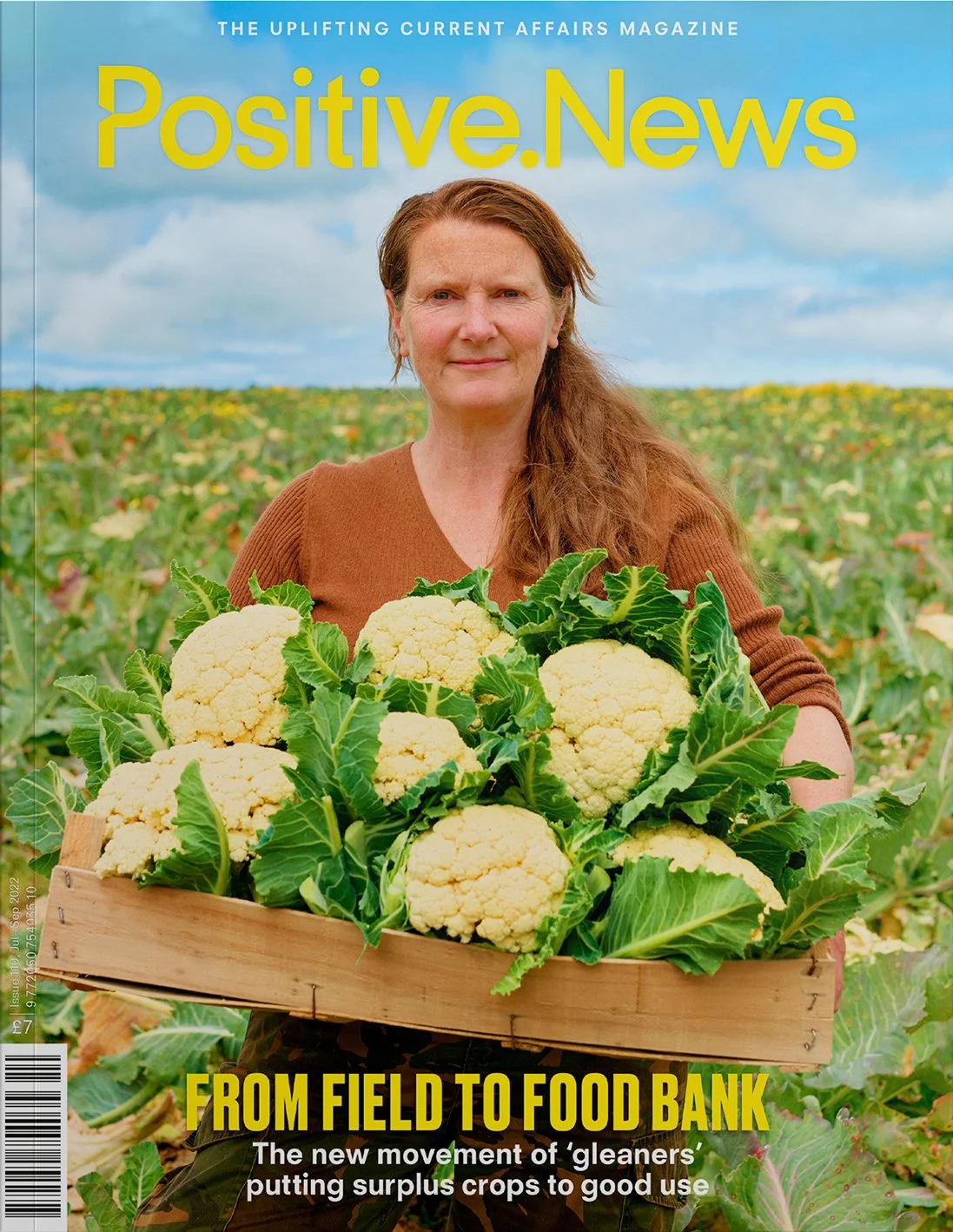
Jamaica Kincaid doesn’t appreciate Zoom self-view. “I hate the way I look on Zoom… I never look at myself.” I can relate. I think this a few times during my call with the author. Like when we’re interrupted by the dentist ringing to check whether Jamaica will attend her appointment on Thursday, or when I find out she has just come in from the garden where she has been plagued by a pest. But it is best to resist wrapping her up in a neat bow – she is many things, not all of which can or should be labelled ‘relatable’.

As well as a novelist and professor of African-American studies at Harvard University, Jamaica is a gardener and gardening writer. She was born and grew up in Antigua. In 1966, aged 17, Jamaica’s mother sent her to the United States to work as an au pair. While there, she took community college evening classes, later quitting her job to study film at university, before quitting that, too.

By the early 1970s, she had moved to New York, changed her name to Jamaica Kincaid and begun writing for magazines including the New Yorker. She has since written more than a dozen fiction and non-fiction books. Her garden in North Bennington, Vermont is the subject of My Garden Book and gathering seeds for it is the object of her adventures in the memoir Among Flowers. Jamaica has been writing about what it means to garden while Black since the 1990s, preparing the ground for new works like Claire Ratinon’s Unearthed: On Race and Roots, and how the Soil Taught Me I Belong and Flock Together: Outsiders by Ollie Olanipekun and Nadeem Perera. 

This summer, five of Jamaica’s works have been reissued by Picador, and five more will follow in 2023. When I ask how she feels about this, she says: “Stunned. It’s something I would not have expected. Those books seem [to be] written by another person. Sometimes I look through them and think, was I really that intelligent? I feel very grateful. But also I think, am I dead? This [reissuing] only happens when you’re dead.”

“When I’m alone in the garden, we are speaking to each other”

Jamaica Kincaid

Kincaid is very much alive and eagle-eyed. She notices a monstera in my living room and jokes about “your generation’s” interest in houseplants. It sets us off discussing the truthfulness of plant categories. She notes: “In your climate, [the monstera] really belongs in a house. In my climate, it’s all over the place.”  

She sees these categories as an expression of human beings’ seemingly insatiable need to order. “[It] haunts me,” she says. “It’s no longer an interest, it’s an obsession. The imposition of the order is to help you get through the day and get through your life. But we don’t stop there. We impose it on the rest of the world that we can impose it on. Especially in the garden, [I wonder] where do you draw a line? Where do you say this is enough?”

We’ll return to ordering and imposition later, but first I ask her what she’s growing. She plays it down, but the answer is lots. Jamaica describes pink prairie rose, clematis, echinacea, balloon flowers, California poppies and Naked Ladies, naming the multiple aliases of each flower with enjoyment. 

You can see snapshots of Jamaica’s garden on her Instagram @virtuouspomona (pomona is the Roman goddess of fruitful abundance). She posts pictures of produce baskets brimming with plump, shiny tomatoes and bunches of herbs; of vibrant flowers with captions like: “a cultivar of the North American hibiscus, part of the mallow family, which for me involves so many conversations, in which I speak to many selves” and of a plank of wood with nails sticking out of it that she has placed in front of the Black Lives Matter sign on her lawn, after it was run over.

Jamaica appreciates the garden’s character, and its willfulness. She describes it as telling her about herself, as gently mocking her and frequently thwarting her. “When I’m alone in the garden, we are speaking to each other,” she says. “I’ve noticed that a lot of plants I seek out invariably are taller than the literature says they should be. And because they’re taller, they stoop and they look just like me.” Jamaica is six foot tall. She tells me: “I think [the plants] are trying to mimic me.” 

Gardening and failure go hand in hand and this, too, is something Kincaid delights in. “I can’t get the garden right,” she says. “And I think I like that the most. I would just lie down and die if I got it right. [Because] then it would be finished.” She describes the devastation wrought by a woodchuck with woe and wonder: “I bought some poppies. Disaster! We had a very cold spring, so I was late getting them planted. I finally put them in the garden and a woodchuck came and ate all of them.”

“All these things that were part of my childhood imagination were interwoven with empire, and the empire is violent and political”

Jamaica Kincaid

Having dreams shattered by pests is something many gardeners have experienced but, for some of us, the complications of growing go deeper. Plants are bound up in the slave trade, and knowing this can add a heaviness to gardening for Black people especially. For the British Empire, plants have meant profit. At sugar cane, cotton and tobacco plantations in the Caribbean and the US, those profits were built on the suffering and brutalisation of enslaved people. 

In the 1950s and 1960s, when Jamaica was growing up in Antigua, cotton was the country’s main crop, along with sugar cane. Having now lived in the US for decades, where cotton is emblematic of the country’s shameful history of enslavement, Jamaica has an understandably complicated relationship with the plant. She says: “I grow cotton. I never get any fruit, but I love the flowers. It’s just like a hibiscus but I think it reminds me of my childhood. Every year, I have some grief with it and I will sometimes say ‘it’s clear that I’m not meant to grow cotton as amusement. It’s forbidden that a Black person should grow cotton just because she loves the flowers’.” 


Gardening history intrigues and troubles Jamaica. She sees the garden as a microcosm of the world – a window into humanity’s best and, more often, worst impulses. “All the plants that I was familiar with in Antigua were not Antiguan at all. They came from somewhere else that’s part of the British Empire.” She cites breadfruit as the perfect example, telling me: “[It] was sent to the West Indies to feed slaves because they took too much time growing their own food, when they could be making money for their masters.” 

She names even more plants, explaining: “The tamarind, the mango, hibiscus… all these things that were part of my childhood imagination were interwoven with empire, and the empire is violent and political. Plants led me into this world of possession, immorality, crossing boundaries. It’s very interesting how the language or the knowledge of plants are interwoven in the world after 1492.” 

Jamaica has short shrift for institutions like Kew Gardens which have attempted to rewrite or ignore their discomforting histories. Since summer 2020, the organisation has, belatedly, begun to recognise its roots in colonialism. She calls the presentation of Kew as a garden “amusing”. She explains why: “In fact, it was started as an extension station – you send a bunch of plants there and redistribute them to different parts of the empire. I [own] a book about Kew and how it has transformed itself into a kind of saviour of the world. I find that so ironic because you could say it was one of the places where the destruction of the world was harnessed.” 

Jamaica is still learning, she happily admits, as we discuss whether it’s harder to learn to write or learn to garden, she says, “I like my ignorance for this reason: it means I have much to learn. I don’t mind being called ignorant at all. I think, ‘I can learn this’. I really enjoy not knowing so I can know.”

Since being in her Vermont home, Jamaica has gardened there for over 30 years and this love of learning keeps her growing, season after season. “I can see the same garden every day for the rest of my life, because you learn something, you’re engaged in something in a way that I can’t find in anything else.” 

It’s time for me to leave Jamaica to the rest of her day and to her garden. As we say goodbye, she looks outside and says: “It’s going to rain later, but we can do a little more gardening in between raindrops. That’s all it is – just drops.” 

Originally published on gal-dem.com

Read More
Positive News Aimée Grant Cumberbatch Positive News Aimée Grant Cumberbatch

Life on the edge: the growing movement to rewild unloved urban spaces
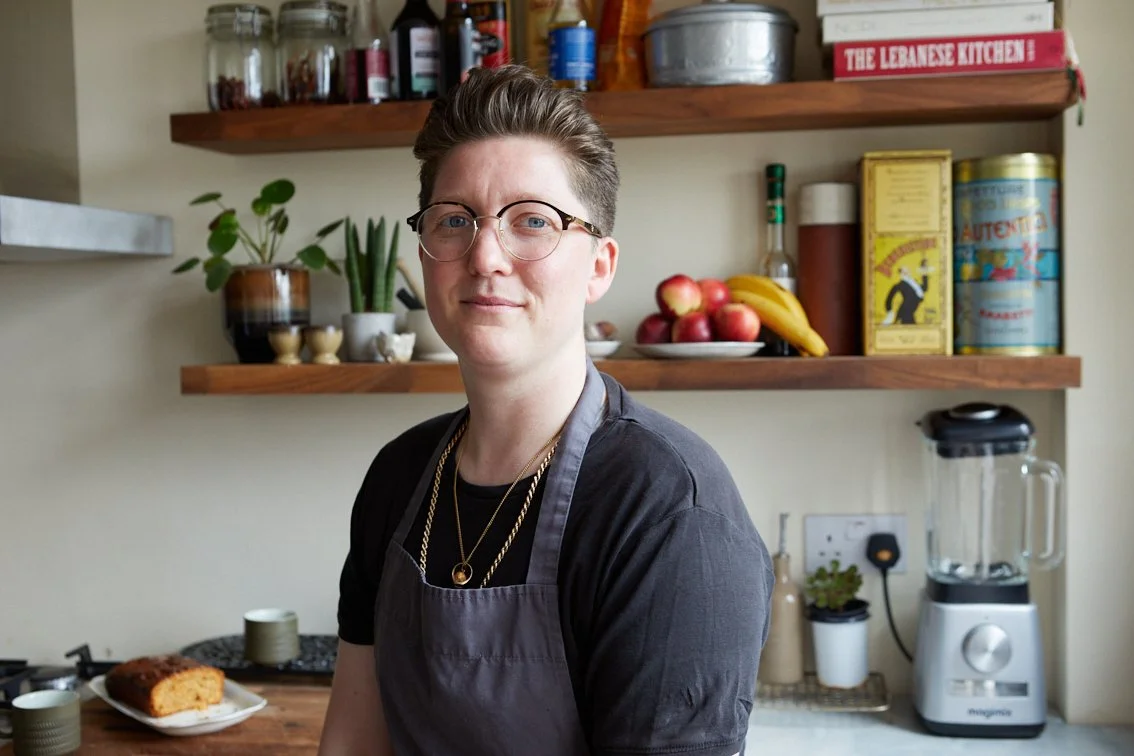
From alleyways to neglected slivers alongside railways, small parcels of underappreciated land are being transformed by community growers to boost biodiversity and wellbeing.

Ask for forgiveness rather than permission,” is Bríd Ruddy’s advice for starting a project like Belfast’s Wildflower Alley. In 2015, Ruddy (main picture, above) along with neighbours and student volunteers from nearby Queen’s University, turned the narrow alley behind her street into a garden. Once marred by vandalism and fly-tipping, the space is now a colourful, plant-filled haven.

Community groups across the UK are taking patches of unloved land and filling them with fruit, vegetables and flowers. As roughly one in five people in the UK live in areas that lack access to green space, any plot, no matter how small, can have an impact. A recent Lancaster University study found that Britain could significantly boost its fruit and vegetable production by cultivating scraps of unused land.

Creating a community garden might sound idyllic but wrangling local authorities and landowners can prove no walk in the park. Ruddy drew on her experience in community development to bring the alley’s official owners – the department for infrastructure – on board. It still took four years of lobbying before gates were installed.

Gates in place, Ruddy was struck by the amount of space. Inspired by childhood adventures in alleys, she spoke to local authorities about a garden. They didn’t share her vision. Undeterred, the Wildflower Alley residents started small. 

“We painted our back doors bright colours, [each] bought a plant, brought out decorations from the house, old things we didn’t want or need,” Ruddy says. From there, wildflower seeds donated by Grow Wild, the national outreach programme of the Royal Botanic Gardens in Kew, and compost from Queen’s University, allowed the alley to blossom.

Lack of local authority support sees many community groups take matters into their own hands. Incredible Edible, a network of more than 150 UK community gardens, is calling for a ‘right to grow’ law. In May 2022 its members drew up plans to oblige local authorities to keep a register of public land suitable for vegetable and fruit growing, which local groups could apply to access. The campaign has cross-party support from MPs, and there are calls for the government to incorporate it into forthcoming levelling-up legislation. 

Co-founder Pam Warhurst said at the time: “We’ve got to give people better health, wellbeing and access to good food. It’s really simple and we don’t have to invest millions – let’s just better use land that taxpayers are already paying for.”

Wildflower Alley is proof a small space can make a big difference. As Ruddy says: “We didn’t realise it would create a green revolution in [Belfast].” Since 2015, the alley has grown not only in terms of planting, but in terms of its impact.

Ruddy explains: “People often feel outside of the democratic process: they feel powerless. When people go out their back door, clear up rubbish, plant greenery, grow food and talk to their neighbours, that’s like a revolutionary act.”

Gardening has also helped residents living near the alley connect with international students and the local Roma community, and has even bridged divisions between loyalists and unionists. “We partner with people down in Donegal Pass, an area renowned for being loyalist,” says Ruddy. “We can go any time to their garden. They bring us produce, we bring them produce.”

Wildflower Alley regularly welcomes visitors such as schoolchildren, who pick strawberries and gooseberries, as well as student volunteers who help with maintenance. Other gardens have sprung up in Belfast’s alleys and Ruddy is also involved with a new larger project in nearby Horsey Hill. It’s a green space open to all, something locals believed impossible due to the risk of vandalism. Ruddy says there have been minor thefts, but mostly it has been untouched.

Alongside tubs of edibles and flowers, which members of the Roma community water, the space has a ‘chatty bench’ overlooking the River Lagan where people can stop for a natter. It also recently hosted a miniature version of the Belfast Mela cultural diversity festival.

Beyond not letting officials dissuade you from your dream, Ruddy advises following the fun: “Recognise that people have a lot on,” she says. “They don’t need a lot more responsibility. Any time we do things, it’s with a cup of tea or barbecue, some music, some art. It’s about providing green spaces for people to enjoy.”

Originally published in Positive News magazine July-Sept 2022 issue.

Read More
Aimée Grant Cumberbatch Aimée Grant Cumberbatch

Chef Rachel Rumbol On How Kitchens Run By Women Have Transformed Her Life
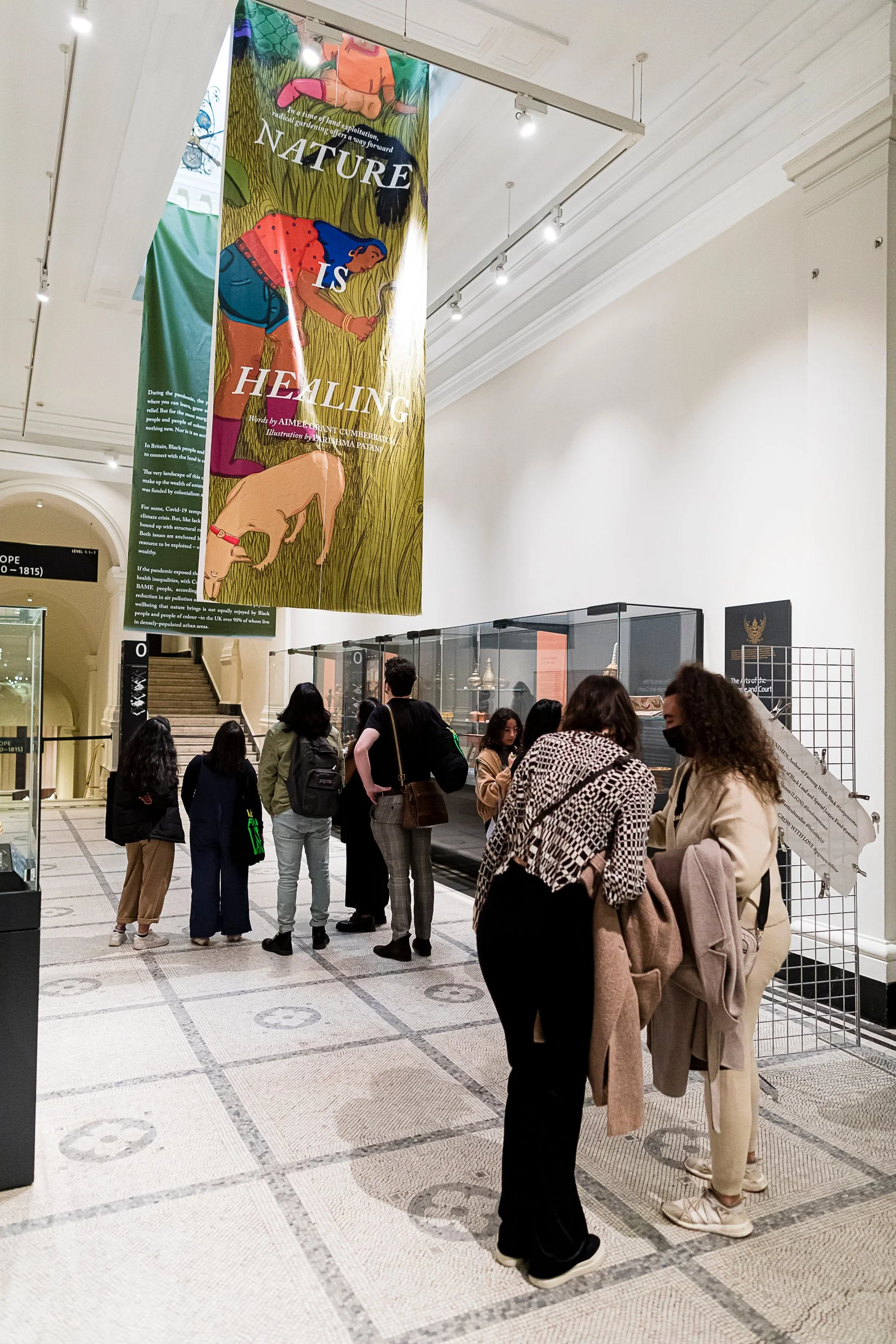
When you think of sisterhood, a restaurant kitchen probably isn’t what comes to mind. In fact, 2018 ONS statistics show that while 56% of hospitality industry workers are women, rising to 60% among front-of-house staff, just 17% of chefs are women. This inequality means kitchens can be isolating spaces if you don’t fit a certain mould. The plot of Stephen Graham restaurant drama Boiling Point might be fiction, but its displays of aggressive, alpha male head cheffing have real-life parallels. Take Eater London’s 2021 report into gender inequality in London’s restaurant industry. It found that women chefs use words like “abuse” and “trauma” to describe their workplace experiences.

Clearly, many restaurant kitchens could use a stronger sense of sisterhood and community. Thankfully there are initiatives helping to provide this, like Junior Bake Off host Ravneet Gill’s Counter Talk and #FairKitchens. Another is Queers in Food and Beverage (QFAB), run by Peckham-based chef and one half of catering company Butch Salads, Rachel Rumbol.

Rumbol, 31, has worked in hospitality for 12 years and as a chef for eight. She first started in the hospitality industry while still at uni, aged 19, working front of house at Islington’s The Diner in 2009 and the Union Chapel in 2011. She returned after graduating aged 23, and waited tables at Elliot’s in Borough Market in 2013 — it’s the place she credits with sparking her interest in food. After realising she might be better suited to creating dishes rather than serving them, she decided to become a chef. Learning on the job, she has since worked her way from oyster shucker to sous chef to catering company co-owner. As a restaurant chef, Rumbol loved her work but, as a queer woman, she found the kitchen culture hard to stomach. That was until 2015, when she found work as a sous chef at Louie Louie, the restaurant co-owned by Hanne, the woman who is now her business partner.

While sisterhood may not be a feature of every or even most restaurant kitchens, it can be found, and when it is, Rumbol describes it as “life-altering.” In her experience, kitchens run by women are more collaborative and supportive. She says of traditional male-led food spaces: “It was the less questions [the better], don't bother the head chef, just get on with it.” Whereas in kitchens run by women, “it was much more let's do this together. You bring your whole self. It's not about splitting yourself up into personal and professional. It's much more liberating than that.”

Despite having found workplaces where she feels supported, uplifted, and accepted, Rumbol says that visibility remains a problem in the industry, especially for queer women. “There are a lot of big players who are from the LGBTQI+ community, but so often it's a footnote. I definitely couldn't have told you many queer or gay chefs that I knew and I definitely didn't know any women. And nobody that really looked like me, as a woman who looks more masculine,” she notes.

So, in March 2021, she set up QFAB to celebrate and connect queer people in the industry. Running the platform has made Rumbol keenly aware that male-dominated kitchens can be especially marginalising for some. “I've noticed it's a difficult environment for the trans community and non-binary community to be open in. You might love food. You might love cooking, but you might go, you know what, I don't think I could be a chef. It’s a struggle for me to even find those voices as somebody who's literally searching for them.”

Rumbol is clear that no one should have to endure “macho, toxic” workplaces. There are other options. She recommends the catering industry, which gave her an alternative way to work with food when long restaurant hours were turning her into a “beast” and getting in the way of her relationships. “I wish I'd known that catering, for example, is an extremely female-dominated industry,” Rumbol says. “It's because of that people are actually more likely to be able to build their own life. A lot of female-run catering companies want other women in them. It suits mums coming back to work, it suits all kinds of different lifestyles.”

For those struggling to find that sense of sisterhood and community within restaurants, Rumbol can relate. “This was definitely me at a certain point. I thought, wrongly, that you had to cut your teeth in the traditional male kitchens in order to be respected, in order to get jobs elsewhere.” Her advice to others is simply don’t stay in spaces that don’t serve you. “Find somewhere that is more aligned with the culture that you want [and] the person that you want to be at work,” she says. “There's plenty of places like that. It just requires a little bit more research.”

As for where to do that research, she recommends social media. “Look at female chefs who run places, have a look on their Instagram.” And when you go to an interview, remember you have power too. “Go to trial shifts and treat it like it's not just them trialling you, you're trialling them. Ask questions about culture,” she suggests. When all else fails? Go with your gut. “When you walk into a kitchen, you see the demographic. Do you feel that's going to serve you and those people are going to pull you up and make you a better person and a better chef? Listen to your intuition. Know that there are plenty of people out there who would love to have you in their teams,” she advises.

This is also where her own Instagram community comes in. Rumbol recommends QFAB as a resource for finding a queer-friendly workplace in hospitality. “Come on my page, have a little look through people who I've profiled or certain companies that very obviously have a queer focus or are queer-owned. You can message them and ask them. They've got jobs, there are jobs out there,” she says.

While total equality within the hospitality industry may feel like a distant prospect, Rumbol is a believer in the transformative power of sisterhood. She tells me: “Sisterhood is really important to uplift each other. There is no scarcity. This whole idea that you've got to push each other down in order to progress is so outdated. I think we're all learning all over the board at the moment that we can all come up together and if anything, we're stronger together.”

For Bustle UK

Read More
gal-dem Aimée Grant Cumberbatch gal-dem Aimée Grant Cumberbatch

Nature Is Healing: How Radical Gardening Offers A Future Free From Land Exploitation

A new approach to tending green spaces is taking root, and it's regenerative, rule-breaking and welcoming of us all.
A new approach to tending green spaces is taking root, and it's regenerative, rule-breaking and welcoming of us all.

It was for good reason that farmer and food sovereignty activist Leah Penniman began her [2018] book Farming While Black with the Malcolm X quote: “Land is the basis of freedom, justice, and equality.” During the pandemic, the privilege of access to green spaces where you can learn, grow and breathe was thrown into sharp relief. But for the most marginalised in society, especially Black people and people of colour, struggling to find green spaces is nothing new. Nor is it an accident.

In Britain, Black people and people of colour’s ability and desire to connect with the land is complicated. The very landscape of this country, the rich green pastures that make up the wealth of estate owners and heritage organisations, was funded by colonialism and enslavement.

For some, Covid-19 temporarily obscured the urgency of the climate crisis. But, like lack of access to green spaces, that too is bound up with structural racism and the inequalities it creates. Both issues are anchored by capitalism, which treats land as a resource to be exploited – often for the benefit of the white and wealthy

If the pandemic exposed the green space gap, it also highlighted health inequalities, with Covid-19 mortality risk higher among BAME people, according to Public Health England. The reduction in air pollution and boost to our mental and physical wellbeing that nature brings is not equally enjoyed by Black people and people of colour – in the UK over 90% of whom live in [densely-populated] urban areas. In 2013, Ella Kissi-Debrah, a nine-year-old Black girl from Lewisham, south London, became the first person in the UK to have air pollution listed as a cause of death. A July 2020 study of more than 400 COVID-19 patients admitted to the Queen Elizabeth Hospital in Birmingham said that “patients of BAME ethnicity are more likely to be admitted from regions of highest air pollution, housing quality and household overcrowding deprivation”.

With little hope offered by our leaders, who sign pledges and make statements but refuse to take the necessary drastic action, who can we look to for encouragement and inspiration? And is it time to take things into our own hands? Thankfully, there are radical groups and individuals taking action in the UK, scattering seeds over bare patches of earth, providing spaces for people like them to grow, and fighting for oppressed communities to have access to the green spaces they desperately need and deserve.

“If the pandemic exposed the green space gap, it also highlighted health inequalities”

Amid the George Floyd uprisings in 2020, organiser and artist Amahra Spence launched the Black Land and Spatial Justice Fund as a way to redistribute resources and help Black people redefine their relationship with the land. For her, land justice underpins pressing social issues. “I couldn’t think of any type of challenge without thinking about land, property, its connections with capitalism and how this country has been built on entitlement to land which was preserved for the white and wealthy,” explains Amahra. “We’re not simply talking about land as a racial justice issue – it’s also a climate justice issue, a gender justice issue, a health outcomes issue.” 

But for Black people and people of colour, how can we develop a relationship with the land when it’s a site of historical trauma? Josina Calliste, co-founder of Land In Our Names (LION), a Black-led collective championing land justice, feels it’s important to distinguish the actual land from the violence that’s happened on it. She cites Leah Penniman’s reasoning that “the land might have been the scene of the crime, but she was never the criminal”.

LION is committed to reparations, which it defines as “conceding power and resources in order to give space to BPOC to repair and heal.” In practice, “conceding resources” would involve giving land (Josina half-jokingly suggests golf courses as a starting point) over to the care of Black people and people of colour. But Josina details why the latter part of LION’s definition is so vital for a truly effective reparations process. “The word reparations, the root of that is repair,” she explains. “The land needs healing and [for] humans who are descended from people who were enslaved, who lived under colonialism, people who carry traumas of migration [or] seeking asylum, land can be the source of healing.” 

Still, she believes healing can’t happen without first addressing what has happened to people on the land. Amahra agrees: “We need to be living within a society that acknowledges the impact of harm, how that is racialised, how that is harmful to people and planet. There has to be some recognition of systemic intent to harm Black people and deny them access to land.”  There have been positive signs of change in recent years: Josina cites Landed, a podcast series she recently worked on, which saw land-owners in the Scottish highlands reckoning with the colonial history of Scotland, as an example. 

“There are radical groups and individuals taking action in the UK, scattering seeds over bare patches of earth, providing spaces for people like them to grow”

But, if you feel disheartened by the prospect of waiting for justice, it could be time to fight for it yourself. “Even through oppression, Black people have continued to pioneer, organise, and root into radical structures of wholeness and community,” says Amahra. She believes Black people’s cultural heritage and ancestral traditions contain lessons for a relationship with the land that doesn’t “replicate patterns of harm”. 

In fact, as Josina explains, the source of a lot of the sustainable wisdom that’s gaining ground today can be traced to indigenous practices, which were “repackaged for white men to be able to claim and sell back”. Even LION’s emphasis on stewardship rather than ownership is inspired by spiritual wisdom: “There’s an ancient belief, which I think is quite common in West Africa, that you can never own land – you’re merely tending to it for the ancestors and the generations yet to come… It’s a beautiful thing to think I have responsibility to the land I tread on, [that] I need to walk gently on the earth.”

If traditional horticulture’s ideas about the “right way to garden” are off-putting, garden designer and educator Hafsah Hafeji advises forgetting about rules. Her work focuses on “greening up” urban areas through guerrilla gardening, which sees people grow whatever they like wherever they like without waiting for permission from the land’s legal owner. 

Hafsah, who studied horticulture at university, having grown tomatoes with her father as a child, explains that the idea that there was a right way of doing things “stifled” her when she first began her career. “I didn’t feel very equal to the people I was working with,” she says. “But as I began to learn more about plants, I learned how there is no steadfast rule. By creating your own version of doing something you empower yourself and make that space yours.”

“There’s an ancient belief, which I think is quite common in West Africa, that you can never own land – you’re merely tending to it for the ancestors and the generations yet to come”

Josina Calliste

But, as Sandra Salazar notes, reconnecting with land doesn’t have to mean you have to get your hands dirty, “just going to a park and walking, going to a forest and looking at the trees, or even looking at the clouds” is enough. As the founder of community gardening initiative Go Grow with Love and growing project Women Leading With The Land, she invites women of African and Caribbean heritage to connect with the land and reclaim it, whether through learning about the soil, sowing seeds, or sharing intergenerational stories.

Where traditional gardening is exclusive, Amahra, Hafsah, Josina and Sandra are among those who are taking a radical and inclusive approach to land access and growing. Where land ownership and commercial farming is exploitative and depleting, they are nurturing and regenerative; their approach is communal instead of private — requiring and welcoming of us all. It’s not about waiting for permission, but about breaking traditions and doing things your way.

The land has been a site of exploitation for far too long. With the climate crisis threatening lives and livelihoods, now is the time to create a new relationship with nature – one that will support and sustain the planet, our communities and ourselves. 

Looking to get into radical gardening? Here’s how to get started:

On growing: “Just get up and do – don’t feel no way. If you need to go and cut down the grass and plant some edibles, do it. You can have your babies growing in your kitchen, in your bathroom. Do what you can.” – Sandra 

On guerrilla gardening: “Find somewhere you can easily access on a daily walk or commute, so you can water it. See what’s already growing there. If it’s completely barren [with] poor soil, perhaps put some wildflowers in the area using seeds… In autumn, planting bulbs [for spring] is really great. I plant lots into tree pits. It’ll rain plenty over winter and you don’t really need to worry about them.” – Hafsah 

Published in the gal-dem Roaring Twenties 21/22 print issue and online.

Read More
gal-dem Aimée Grant Cumberbatch gal-dem Aimée Grant Cumberbatch

How To Grow Callaloo With Claire Ratinon

The documentary producer turned organic food grower shares how she started out in horticulture – and what you can do to get stuck in and grow your own food.
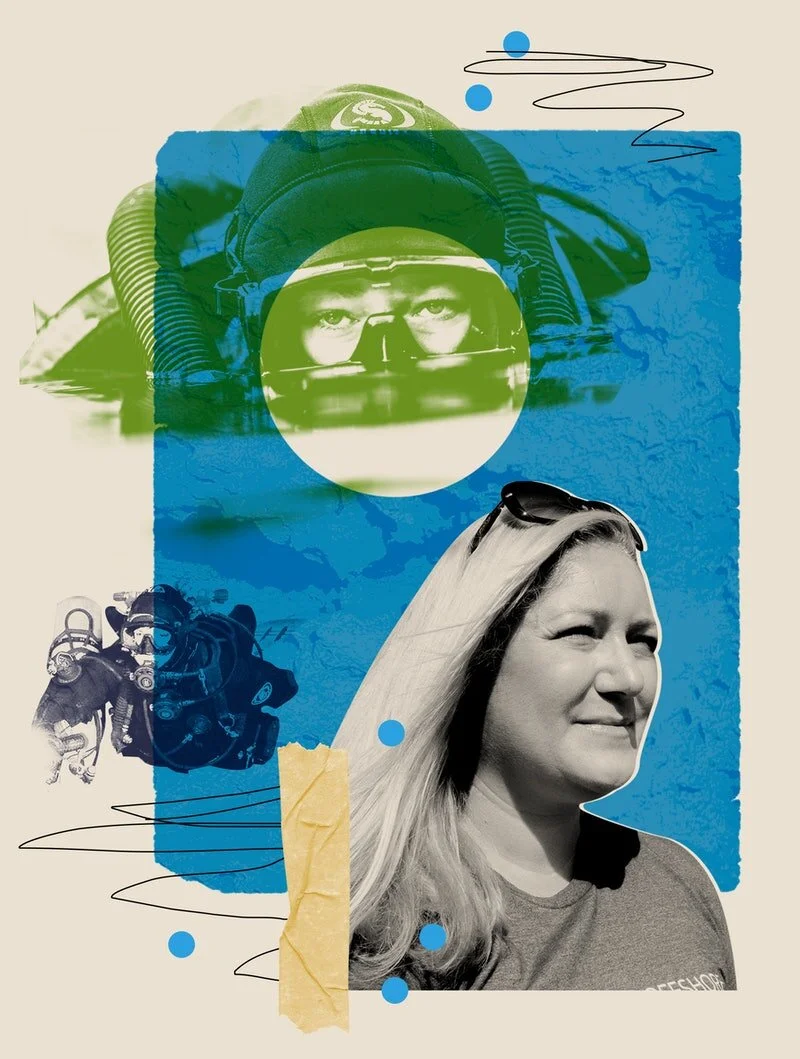
Claire Ratinon says she doesn’t have a good ‘how I got into gardening’ story. But I’m not so sure. Unlike other gardeners and green-fingered enthusiasts who trace the roots of their interest back to growing things with grandparents, the organic food grower and writer explains she was more interested in being inside with a book as a kid than outdoors with plants. Fast forward to leaving the UK and her time in New York working as a documentary producer and things changed. She happened upon a sign inviting passers-by to explore a rooftop growing space. Incredulous and intrigued, she did.

“I went up these stairs and all the way to the eighth floor. It’s amazing, there’s just over an acre’s worth of productive land on a rooftop in Queens, overlooking the Manhattan skyline… and it’s full of vegetables. I was so taken by this implausible space,” she explains. Other gardens had never captured her attention the way Brooklyn Grange – a collection of rooftop farms across the city – did. “It was like a light switched on.”

“We eat three times a day. We rely on these processes in order to, not just thrive, but be alive. [Food-growing] is the most amazing thing but it’s magicked away from our view. And the stuff that was growing was so vibrant and delicious, I couldn’t get enough of it,” she adds. 

After Claire spent two summers volunteering at Brooklyn Grange, she decided she needed to make growing “a meaningful part of [her] life.” She returned home to London, eventually settling in a flat without even a windowsill to nurture seedlings on, and “ran around Hackney trying to find places that would let [her] near their plants.”

Slowly, she retrained alongside her production work and now horticulture is her full-time job. She has her own garden in the countryside in East Sussex and shares her knowledge with others in talks and workshops, as well as her 2020 book, How To Grow Your Dinner. So what would she recommend to those just starting growing?

“You’re not creating a sterile environment that just produces something and you take it. It’s about creating an ecosystem”

Claire Ratinon

“Always observe and take notes. Then you can figure out where you insert yourself in the process and where you can step back. It enables you to tune into the natural fluctuations of the outside world. Even when I’m not growing, I write down what the weather’s like every day.”

In her work, she emphasises gardening as something to participate in rather than take over and control. “You’re not creating a sterile environment that just produces something and you take it. It’s about creating an ecosystem. My garden is not just for me, [so] I’m very grateful, even when I’m cursing the flea beetle [that] has obliterated my pak choi.”

Claire links the unwillingness to let go and embrace change reflected in the formal gardens of traditional horticulture to colonialism, an idea she explores in a pamphlet created with her partner, artist Sam Ayre, entitled Horticultural Appropriation. “It touches not just [on] the actual physical role of colonialism within horticulture, but the echoes of that in the way that we grow. We are in a time of profound change – not just as in ‘let’s talk about colonialism’, but also climate change, the pandemic. We have to figure out how to be adaptive within something that has arguably kind of ossified around a very old style of doing things. [The pamphlet] presents different ways of assessing the possibilities.”

Below, Claire shares her tips for growing the ingredients that make up the classic Caribbean callaloo, a vegetarian dish, with the main ingredient being the leafy green of the same name, cooked with other vegetables and herbs. For an easy-to-follow recipe try this one from Eat Jamaican – just don’t @ me if it’s not as good as your Gran Gran’s! You can find a recipe for the similar Mauritian dish toufé bred from Cook Pad user Veenasa (no tomatoes and thyme needed). 

Callaloo

Claire describes the vegetable callaloo as “pretty straightforward” to grow. She advises germinating its “very tiny seeds” somewhere warm — on a sunny windowsill or outside “when the weather’s warmed up.” Once your seedlings are ready to plant out (Claire recommends waiting for a consistent temperature of around 13C) space them at a distance of 30 cm – although if you’ve sowed directly into soil, thin out to this distance. Callaloo requires full sun and well-draining soil, to the point where it’s very drought tolerant. Always a bonus!

You can start harvesting as soon as it starts producing a number of leaves, Claire tells me. Don’t panic if flowers appear, as these can be removed “to encourage more leaf production”. She also recommends doing this if you don’t want growing callaloo  “forever”, as the plant self-seeds very easily.

There’s no reason why you couldn’t try growing callaloo in a pot either, says Claire, but she recommends picking the leaves early to keep the plant small. 

Tomatoes

Warmth is key to getting these going, as Claire explains in How To Grow Your Own Dinner: “Tomato seeds must be kept at around 20C to germinate, so it’s worth using a heated propagator if you start early.” She recommends potting your seedlings into increasingly bigger pots until they are 15 cm tall ‘when they can be moved to their forever home’.”

A sunny spot is non-negotiable for tomatoes, Claire writes that they’ll need at least eight hours a day. Feeding is almost as important, especially if growing in containers. She recommends incorporating seaweed meal into your compost before potting out and when flowers appear, feeding with liquid seaweed fertiliser every couple of weeks. As for watering, timing is crucial — Claire says “tomato plants prefer a big drink once or twice a week over a light sprinkling every day.”

If you’re planning on growing in pots, Claire advises using determinate or bush tomatoes, which are more compact. And if you’re really pushed for space, dwarf varieties “can thrive in surprisingly modest containers.” 

Onion and garlic

Onion and garlic are fairly easy to grow and have similar needs. Even better, they will grow in containers. Claire suggests beginning them from sets in autumn and overwintering them in situ, but if you don’t have the space, you can start them off in spring.“Sow them 20cm apart, with each clove [or baby onion] pushed about 2cm into the ground, pointy end up.” 

She explains that both crops will want somewhere sunny and soil full of nutrients, so enrich what’s already in the ground or “grow it in some really good multipurpose compost” in a pot. Onions and garlic are prone to rotting, so drainage is key. Overall, she says “keep it weed-free and moist without being soggy.” 

Harvesting should take place “once the leaves turn yellow.” All you need is to “gently lift them out of the ground with a fork and leave them to dry.” 

Chilli

The most important thing for chillies is giving them enough time to develop flowers and fruit. Claire tells me: “I sowed my seeds in late February. If you’re growing an early variety, you can sow them a bit later because they’re quicker to reach a yield.”

They need to germinate somewhere warm — Claire suggests an airing cupboard or a propagator, but says “once they get going, as long as they’ve got enough light they’re comfortable on a windowsill.” She advises against trying to grow them fully outside and instead says stick to “a conservatory, a windowsill, or in a greenhouse.”

Chillies need to be pollinated in order to bear fruit, so Claire recommends taking them outside when it’s warm to allow bees or the breeze to do their work. If you don’t have access to outdoor space, you can help out by giving the plants a little shake. 

Thyme 

When growing thyme, you should keep its natural habitat, the Mediterranean, in mind, says Claire. “If you think about what that climate’s like, it’s hot, dry and very well-drained. [Thyme] does not like having wet feet. You want it in a sunny space.” Luckily this means it thrives in pots where “you can control or at least have some say in how wet it gets.”

Whether you’re growing in the ground or in a container, you should “incorporate some grit or gravel to make sure that there’s additional drainage”. In terms of getting the plant going, Claire advises that it’s simple enough to start thyme from seeds or create a new plant from cuttings, but that buying a plant and nurturing it is the easiest route to a bountiful harvest.

Read More
Bustle Aimée Grant Cumberbatch Bustle Aimée Grant Cumberbatch

Meet The Ghost Fisher Saving Sea Life One Net At A Time

Ocean litter is a phrase many of us associate with plastic straws trapped in the nostrils of turtles. Or plastic bags that are mistaken for jellyfish and eaten by whales. Or maybe even the micro-plastics from broken-down ocean debris that find their way into our bodies through the fish we eat. But most of us aren’t as aware of a different type — ghost gear. This is the name given to lost, forgotten, or abandoned fishing gear. It may not receive as much attention as plastic objects more familiar to us, but it’s no less harmful.

Ocean litter is a phrase many of us associate with plastic straws trapped in the nostrils of turtles. Or plastic bags that are mistaken for jellyfish and eaten by whales. Or maybe even the micro-plastics from broken-down ocean debris that find their way into our bodies through the fish we eat. But most of us aren’t as aware of a different type — ghost gear. This is the name given to lost, forgotten, or abandoned fishing gear. It may not receive as much attention as plastic objects more familiar to us, but it’s no less harmful.

This is where the charity Ghost Fishing UK comes in. Its team of specialised scuba divers — all of whom are volunteers — undertake regular expeditions to retrieve ghost gear and disentangle the wildlife caught up in it. Christine Grosart, who has 16 years of diving experience, is a trustee and team leader of the charity. She’s also an off-shore medic, a former paramedic, a cave-diving instructor, and former jockey. Included in Radio 4 Woman’s Hour’s 2020 Power List, dedicated to women whose work makes a significant contribution to the future of the planet, she’s been described as an “ocean warrior.”

Working offshore may seem at odds with Ghost Fishing UK’s environmentally friendly mission, but for Grosart the former enables the latter. She told Wales Arts Review: “You might think I’m a total hypocrite working in the oil and gas industry. I justify it as, I’m a medic so I don’t actually have anything to do with the fossil fuels process directly. The job gives me the time and money to pursue my charity work in a meaningful way.”

Here she explains the importance of Ghost Fishing UK’s work and shares how it feels to inspire other women to get involved with diving.

Can you tell me more about your family connection to diving and how it has shaped your work?

My mum became a single parent when I was four. She was a scuba diver before I was born and she carried on snorkelling and diving. It was definitely my mother that made sure that I had a lot of confidence in the water. She will get in the sea in November in a bikini and swim. I've never known anyone like her. She just absolutely loves the ocean.

It was definitely my mother that made sure that I had a lot of confidence in the water. She will get in the sea in November in a bikini and swim. I've never known anyone like her. She just absolutely loves the ocean.

She had me snorkelling from age seven. Around the age of 14, every Wednesday evening, she'd go to the local scuba diving club and I'd go with her. Eventually she said, "Look, you've picked the two most expensive sports going, horses and diving, you've got to pick one." And I was like well obviously, horse racing's my career and horses are my thing, so that's what I'm going to do. I always thought I could come back to diving anytime, so I set it aside until I was older.

Can you tell me a little bit about your work at Ghost Fishing UK and what it involves?

We started this up back in 2015. My partner, who's a diving instructor, was out teaching a course in Croatia. He ran into a group from the Netherlands, who'd set up the Ghost Fishing Foundation, a small group of divers going around clearing up lost nets, ghost nets.

It's completely volunteer-led. We set up from a small group of friends and it just expanded and expanded. Now we've got 70 members on our books and a waiting list of 120. Some people get confused because they see our output and they're like, obviously this is a professional job. It really isn't, we're just doing a really good job of it.

We set up [Ghost Fishing UK] from a small group of friends and it just expanded and expanded.

There's loads of divers in the UK who don't really know where they dive. Unless you're a photographer or you like bringing up bits of wreckage, most divers tend to do it for two or three years and then life takes over. So we thought it'd be not only good for the environment but also good for the diving industry, to give divers a purpose for their diving. We've had divers in our organisation that say they probably would have given up diving had they not joined us.

Could you give me a bit more detail about the dangers posed by ghost nets and other ghost gear? What are the risks of it being left to drift in the sea?

The first risk is to wildlife. This stuff is designed to catch fish and it's very good at what it does. If it's left unmonitored, it's not just going to stop catching. But of course, that fish never gets landed, the net never gets pulled in. You could start out with crabs and fish. Then bigger animals come in because of the smell of death. Seals, crustaceans, porpoises, other animals come in and get tangled too. Out in the Maldives, there's lots of poaching, lots of gillnet [a curtain of net that hangs in the water] fishing out there. So turtles are forever being released from nets there. It's just an ever increasing cycle.

The other problem is plastics. A lot of modern fishing net is made of crappy plastic. Over time, they get worn and they break, they get tangled up on the sea bed or wreckage and they get lost. They break down into smaller and smaller pieces and animals ingest those micro-plastics. So even if these nets are dormant and they're not catching anything, they're still going to cause a longer-term problem.

And, of course, the fishermen lose their catch. If all these loose nets are out there catching stuff and they're not landing it, they're losing valuable food. The crabs and lobsters that we pull out are probably sellable. We're pretty clear that these nets in the main, certainly around the UK and Europe, are not being lost deliberately.

When you are able to recover these nets, you find a lot of the wildlife is still alive. So that must be quite positive to be able to say “we've been able to release them”?

Absolutely – and it is really rewarding for our divers. It's extremely time consuming — picking one crab out of a net can take 15 to 20 minutes per person. They get their joints all wrapped up in it and they're an absolute mess. It's a real pain to release them, so it really is all hands on deck.

There was one net we brought in last year, it'd been reported to us by three different divers out on a reef offshore at Plymouth called Hand’s Deep. A beautiful reef, covered in coral anemones. We found it, surveyed it and recovered it. It was 200 metres long and 119 animals were in that and about 80 were alive that we released. And we got that net recycled.

I would imagine, but please correct me if I'm wrong, that there aren't that many women who do the work that you do, who are cavers or divers, is that true?

Offshore – on rigs and boats – women in the UK sector is about 4%. So that's a crumb. It's getting slightly better. There have been some rigs I've been to where it was about 10%. You're away from home for long periods of time. I haven't got any children, I've got no pets, I'm a completely free agent, so I can do this, but most women I know are not in that position. I think that is a stumbling block.

There are very few, if any, women engineers. There are no women divers. There are a few chemists, but it's not great. On our boat, we've got a female captain, but she's had to battle her way to the top and she's got the scars to show it.

It's extremely time consuming — picking one crab out of a net can take 15 to 20 minutes per person.

[As a medic] I've never had a problem getting a job. Everywhere I've been, I've been asked back. I'm treated the same as everybody else. When I first started offshore, I was armed and ready for battle, but the battle never came.

Cave diving is typically a “macho” sport. We are underrepresented. But in terms of caving, dry caving, rope stuff, there are absolutely loads of women in the sport. Not quite 50/50, but nearly. There are a lot of seriously hardcore women in caving.

In scuba diving, plenty of women do it, but not to a high level. As soon as it becomes a bit technical with more gear, you can see the number of women on the boat shrink. If I go out in a big technical boat to do a deep dive, you can guarantee I'm going to be the only woman.

Do you think that's something that comes from women themselves and the messages they receive from society? Or do you think there could be more done to welcome them?

I just think women look at cave diving and go, “well that looks really cool, but I couldn't do that.” It probably is societal, down to perceptions. They're just not told about it when they're doing their options at school. Peer groups [are a factor] as well. When I was growing up, I didn't know anybody who worked offshore, let alone female, so how would I even know that was a job I could do? Since I've been doing it, a lot of my female friends have seriously looked at it and they've gone, "Do you think I could do that?" I'm like, "Yeah!"

What about ghost fishing? Do you find you get interest from volunteers who are women?

We do. When we were up [doing dives] in Scrabster and Orkney, we were almost up to 50/50 male/female on the boats. Plus, I run the show. I actually encourage them into the organisation because there are plenty of diving organisations out there that are quite off-putting to women. They're quite macho or everybody mansplains to women like they're stupid. Whereas this organisation, we've got two female instructors.

That really shows the importance of your presence there to be an example to other people who have that interest.

I've done it myself. I'm approaching 40, I'm way fatter than I ought to be, I drink too much, I consume too much. I'm a normal person. I suppose I enable them to think in a different way. It's great to be able to do that.

For Bustle UK

Read More
gal-dem Aimée Grant Cumberbatch gal-dem Aimée Grant Cumberbatch

The History Of Black British Gardeners Is One Of Resistance

From the transatlantic slave trade to Kew Gardens and the Chelsea Flower Show, the long history of Black horticulturists can’t be forgotten.
Gardening while Black is a vastly different thing to gardening as a white person. For one, Black people in the UK are four times as likely as white people to have no garden, balcony, or private outdoor space. Then there’s the history of violence and oppression at the hands of white people that complicates Black people’s connection with the land. But, Black gardening history is also a story of resistance, long-held knowledge, nourishment and survival. 

To understand Black people’s connection with the land, you have to look at the transatlantic slave trade. Enslaved peoples were stolen from Africa, trafficked far from home and forced to cultivate sugar, cotton and tobacco for the profit of colonial powers. But, aside from their forced labour on the land, the horticultural skills of enslaved Africans were also exploited for the gain of British scientists.

During the time of enslavement, British naturalists, including one named James Petiver, often used enslaved people as collectors of plant and insect specimens because they had greater knowledge of them. Sam Kean writes: “Some naturalists also instructed their contacts abroad to train slaves as collectors. Slaves often knew about specimens that Europeans didn’t and visited areas that Europeans wouldn’t. Those slaves virtually never got credit for their work, though Petiver did offer to pay them a half-crown (£14 today) for every dozen insects or 12 pence (£5) for every dozen plants.”

Some of these specimens will have contributed to the wealth, both of knowledge and finances, of British institutions like the Natural History Museum, Kew Gardens, and the Royal Horticultural Society. Institutions which now show varying levels of willingness to interrogate how they’ve benefited from colonialism. In a post entitled Addressing Racism Past and Present director of Royal Botanic Gardens Kew Richard Deverell wrote of how “parts of Kew’s history shamefully draw from a legacy that has deep roots in colonialism and racism”. This isn’t just Black British gardening history, of course, but British history full stop. 

“Gardening was also used by enslaved people as a means of resisting and surviving”

Gardening was also used by enslaved people as a means of resisting and surviving. Gardens were a place they could grow food to supplement the deliberately meagre and malnutritious diet slavers allowed them. As Brown University visiting associate professor of International & Public Affairs and Africana Studies Geri Augusto explains in a blog for Liverpool museums:

“Enslaved people took the initiative to create small plots and provision grounds. It was a very small patch of ground either beside the slave hut or on […] a piece of land that the plantation owner didn’t need. On these small plots they would raise vegetables, medicinal plants and even flowers.” She continues, “In a way you could think of it as resistance, survival is always resistance if you can make it. They were supplementing their diet, but also it was a small patch in which they could be human.” 

In Seeds of Memory: Botanical Legacies of the African Diaspora, professor of geography at UCLA Judith Carney writes of “the agency” these gardens gave. And, a Penn Museum blog explains how they were often so successful that enslaved people could sell their produce for money, helping them make small improvements to the dire conditions they were subjected to. 

In these gardens enslaved people grew vegetables like Okra that came from Africa with them, plants they arguably would have known how to cultivate thanks to ancestral skills and knowledge.

Black people weren’t just gardening in British colonies hundreds of years ago, but in Britain itself. There are unnamed individuals like the caretaker of Newcastle’s Shieldfield Green Park in 1888 who, as historian Jeffrey Green notes on his website, was a Black man. But there are also Black gardeners in history we can put names to, like Thomas Birch Freeman, who was born in Twyford, Hampshire in 1809. He was a gardener on an estate in Suffolk and later contributed horticultural samples to Kew Gardens’ collection after relocating to the Gold Coast (now Ghana) as a missionary. As gardening historian Advolly Richmond writes, “[Birch Freeman’s] contribution to botany, plant collecting and horticulture has been overshadowed by his religious legacy.”

“Black people weren’t just gardening in British colonies hundreds of years ago, but in Britain itself”

Even earlier, there was John Ystumllyn, birth name unknown, brought to my attention by an article in Horticulture Week by Zahra Zaidi. Ystumllyn was one of the first Black men to be recorded living in North Wales. He was abducted as an eight-year-old from Africa in around 1746 and taken to Wales to live with the Wynn family.

Zaidi writes, “[He] was placed in the garden to learn horticulture. The Wynns discovered that John could do just about anything in terms of gardening, crafts, or floristry”.  Ystumllyn was added to the Oxford Dictionary Of National Biography, cited as someone “whose settled life existence in rural Wales reminds us of the persity of the historical experience of Black people in Britain”.

Black British gardening history is, of course, alive and still being made. In 2015, Danny Clarke became the first Black gardener to be given a TV show. In 2016, Juliet Sargeant became the first Black woman to exhibit at and then win the Chelsea Flower Show with a garden that referenced slavery of the past and the present. The same year, Flo Headlam became the first Black presenter of BBC’s Gardeners World. 

Milestones like these are bittersweet in their overdue recognition of Black gardeners’ talents and their exposure of how many barriers remain. But they are also important in the narratives they challenge, as Julliet Sargeant tells me. “[At] Chelsea, most of the visitors, especially the people who buy the very expensive tickets, are white. It’s not that there aren’t black people there, but they’re usually the people who are serving drinks or working in the car park. They were saying to me: ‘It’s brilliant that you’re here, we didn’t know it was possible to be a Black garden designer.’  And I got loads of emails afterwards from young people saying ‘we didn’t know there were any Black garden designers.’

Black people have been rewriting and reclaiming what it means to be Black and garden for centuries, and continue to do so. Whether it’s the Uplands in Birmingham, where allotmenteers grow ingredients for the Caribbean food they know and love, or organisations like Wild In The City which help Black people understand their connection to the land as ancestral.

Black people have been in gardens, have been horticulturists, have been botanists, have been hobby gardeners, have been allotmenteers, have been houseplant-lovers. Just because it isn’t always recorded in history books, taught in schools, or displayed in museums doesn’t mean it didn’t happen. 

Read More
Bustle Aimée Grant Cumberbatch Bustle Aimée Grant Cumberbatch

How I Made It Work

For women in their early and mid 20s, financial stability can feel out of reach, particularly for those without the privilege of family money or a large salary. How I Made It Work features women in their 30s who have done what can feel like the impossible and achieved financial security. In each piece, they will share how they managed to do it and give their tips to help you do the same. Honest, practical, and non-judgemental, How I Made It Work is here to take the fear and mystery out of financial planning and show that security comes in many forms.

I run a financial series for Bustle UK which aims to destigmatise conversations around money and demystify the process of achieving financial stability.

You can read my How I Made It Work articles here.

Read More
Bustle Aimée Grant Cumberbatch Bustle Aimée Grant Cumberbatch

66 Articles About Racism In Britain & The Black British Experience

Earlier this summer – and since – the Black Lives Matter movement has seen hundreds march in solidarity across the world and in the UK. Anti-racist content has flooded social media. Both protests and social media activism were in direct response to the murder of George Floyd, a Black man, at the hands of a white police officer in the U.S. state of Minneapolis. But not him alone. We learned the names of Breonna Taylor, Elijah McClain, Tony McDade, Dion Johnson, and so many others. All examples of police brutality and victims of systemic racism. On Sept. 23, the Kentucky attorney general announced that the three police officers who were under investigation for the death of Breonna Taylor would not be prosecuted. Instead, Brett Hankison will face charges for "wanton endangerment." This has sparked a new wave of calls for justice.

While it's important that Black Lives Matter and the way in which racism is baked into society in countries around the world is garnering so much attention, it's long overdue. The UK has its own long history of racism which is barely acknowledged or understood by most. If the ongoing conversations and protests have made you realise you require further educating, this list includes articles that can help you begin to fill those gaps. (There are also books about race in Britain you can read, Instagram accounts you can follow, UK organisations you can support, and podcasts you can listen to.) Understanding Britain's colonial legacy and the way it impacts on the lives of Black British people daily is not something that can be achieved by the clicking of one or even a few links, but it is a start. There is a wealth of brilliant writing out there from Black journalists, writers, and historians and about the life and work of important Black British people. Get to know it.

Recently Published

Being anti-racist must be a conscious and continuous effort — when Black Lives Matter is no longer trending, education and activism will keep going. Staying informed and keeping on top of news and conversations about race – and then sharing this new knowledge with family, friends, and colleagues – is one of the most effective ways to do your bit in creating an anti-racist society. The articles below, all published within the last few months, are a starting point for staying up to date on discussions of race in the news and will be updated regularly:

Anti-Blackness In Modern Britain

Anti-Blackness is a specific form of racism that is widespread within modern British society. It’s part of the legacy of Britain’s colonial past and it affects the way Black people are treated and exist in Britain at every level. These articles will help you better understand what anti-Blackness is and how it manifests itself in British society.

Racism In Modern Britain

Once you’ve understood the concept of anti-Blackness, you may want to consider doing further reading and research into racism in Britain more widely. These articles break down the various profound ways in which discrimination impacts the lives of people of colour in the UK of all kinds.

Black British Life

Covering successes and struggles alike, these articles speak to the reality of life as a Black person in Britain today.

Black British History

Despite what your school curriculum may have made it seem, Black British history is British history. You may have learned about slavery as a bare minimum, but chances are you did so from a white British perspective. Besides, there is so much more to Black British history, it’s past time to get acquainted with the origins of Notting Hill Carnival, the contributions of the Windrush Generation, and the activist heroes whose names you should already know.

Britain’s Colonial Past & Legacy

To be fully educated on the extent to which racism against Black people underpins British society, it’s vital to look back at the country’s history of colonialism and oppression of Black people. “The UK is not innocent” has been shared widely across Instagram in posts related to the protests for George Floyd – the below articles are just a starting point for getting acquainted with the horrific truths behind this statement:

Activism & Allyship

Bringing learnings from your research and the sentiments shared on social media into your every day – your actions, your thinking, your conversations with family, friends, and colleagues – is the only way to effect real change for Black people and communities in the UK. The articles below share both practical information on effective steps you can take to be a better ally, as well as taking a deeper look at the negative impacts of performative activism and optical allyship on the Black Lives Matter movement:

Read More
Bustle Aimée Grant Cumberbatch Bustle Aimée Grant Cumberbatch

What The "Thank You NHS" Rainbow Really Means To LGBTQ Staff & Patients

Shortly after the UK went into lockdown on March 23, rainbow posters started appearing in the windows of homes across the UK. Often drawn by children, they were intended to show support and appreciation for NHS workers who were not only dealing with an influx of coronavirus patients to hospitals, but shortages of essential PPE, which put their own health at even greater risk. According to the BBC, the NHS rainbow trend was started by a Birmingham nurse, who invited members of the public to send rainbow drawings into the temporary NHS Nightingale Hospital.

Since then, the symbol has become short-hand for support for the health service across the UK's four nations. NHS rainbows have been chalked on pavements, spotted at football stadiums and tennis courts, displayed on banners on Oxford Street as it reopened, and spray-painted onto playing fields. A host of merchandise has sprung up, with rainbow badges, mugs, tote bags, pizzas, and even inflatable sprinklers being sold in aid of NHS Charities Together. But, as many members of LGBTQ communities have pointed out over the past few months, however well-intentioned the displaying of NHS support posters and selling of charity items is, the rainbow symbol was already taken. The NHS rainbow and the Pride rainbow are slightly different, with the NHS rainbow consisting of five stripes and the traditional Pride flag having six (though there are growing calls to add more stripes to better include trans people and LGBTQ+ people of colour). But this hasn't stopped members of the public and companies accidentally – or deliberately – confusing the two.

Members of LGBTQ communities have expressed concern that the use of the rainbow to celebrate the NHS will undermine its meaning. As LGBT Foundation Pride co-lead Joe Nellist told the BBC, "There is genuine fear that its use as a symbol of hope for the NHS will lead to the disassociation of it as a symbol of LGBT equality." But how do those who are both members of LGBTQ communities and NHS workers or patients feel? We spoke to Dan, a junior doctor in Manchester, Dr Mike Farquhar who spear-headed the rainbow badge initiative at London's Evelina Hospital, and Sarah, an NHS user. Here's what they have to say.

Sarah — NHS User

"I’m never going to say that somebody using a rainbow symbol to support the NHS pisses me off — I don’t think anyone in the LGBTQ community would. I mean, most of my family are currently working on the frontline in hospitals battling coronavirus. The NHS holds a very special place in my heart. And, if you look at it from the beginning, it all started with kids counting the rainbows in windows. That was so sweet, and it turned into a show of solidarity for the NHS. I don’t have any problem with it on that level.

The issue is that, before coronavirus happened, if you saw somebody hanging a rainbow flag outside their window or in their front garden, that was a way for us to see if somebody else was an ally. But I’ve seen young people share images of their grandparents putting rainbow flags out in their garden when they know for a fact that their grandparents are homophobic, for example. That’s what gives me anxiety: that a symbol of allyship can now mean one of two things and I don’t know which of those two it is.

What muddies the situation even further is that larger companies are actually openly selling things they would have sold for Pride this year as NHS flags. All these things that normally would have been used in Pride parades are suddenly being sold as something else. That’s when it feels like something has been taken from us.

With the rainbow NHS badge initiative, that was a way to make us feel like we could open up to our doctors and caretakers. Even though doctors take the Hippocratic Oath (which is supposed to ensure that they treat each patient equally), as we’re seeing in America right now — where they're trying to roll back healthcare protections for trans people — that won't always be the case. And the UK aren’t far behind on that front. It’s really big stuff and we’re all very worried about it. So as much as doctors can say that they are not affected by somebody’s lifestyle, people’s treatment is still massively affected by prejudice. If I walk into a doctor’s surgery for a sexual health appointment, for example, it takes a few questions before I feel comfortable enough to turn around and say 'Look, none of these questions apply to me because I’m gay.' People rarely begin consultations with 'What’s your sexual orientation?' and almost never ask 'What are your pronouns?' But those are massive things that can answer a lot of questions and stop a lot of embarrassment down the line. So if somebody treating you is wearing a rainbow badge, we now have to think, what do you mean by wearing that badge? Can I be open and honest with you or do I have to be careful?"

Dan — Junior Doctor In Manchester

"I don’t really mind the use of the rainbow in support of the NHS. However, I associate it so strongly with Pride and the LGBT rights movement that it’s a bit weird seeing it in this context. I certainly don’t feel that LGBT people own the rainbow. The six original colours of the Pride flag each had separate meanings, and I wonder how many people could actually even name them — I can’t. Besides, more recently the flag has begun to evolve, to include colours for trans people and people of colour, making a flag distinct to the historical rainbow.

If a bus company wants to save a few pennies by slapping the NHS logo on a Pride bus, I think there are much bigger battles to be fought.

I know there were a few tweets by people who were offended at a bus company in Plymouth taking their Pride bus and slapping an NHS symbol on it. I found whole thing silly as it seemed we were debating which completely inconsequential branding of a bus was worse. If anything I’m outraged by the absolute lack of tangible improvement for anyone involved [either NHS staff of the LGBT community]. Not to mention the fact that Pride was consistently referred to as a ‘brand,’ which is a depressing reflection of its commercialisation and de-politicisation. What matters is not whether an organisation ‘brands’ itself in support of Pride, but whether their actions advance the rights and interests of LGBT people. Like the fact that the Home Office marches in the Pride Parade. I don't think there's any pride in deporting LGBT people back to countries where they're in danger just because they weren’t born here.

One of the more concerning things for me is that people read these articles and think ‘look how ridiculous these people are, getting annoyed at what colours are on a bus,’ and use this to delegitimise valid LGBT causes, like the ongoing attack on trans rights. If a bus company wants to rebrand and save a few pennies by slapping the NHS logo on a Pride bus, I think there are much bigger battles to be fought.

I'd probably have the same opinion even if I didn't work as a doctor. The NHS has got a long way to go still with LGBT rights, in particular trans rights and the treatment of trans patients and staff. In that respect, I identify more strongly as part of the LGBT community than with being an NHS worker. Because at times the NHS has not supported me. So if we're picking teams, that's where my affinity lies."

Dr Mike Farquhar — NHS Rainbow Badge Lead & Sleep Consultant At Evelina London Children’s Hospital

"Launched at Evelina London in October 2018, our rainbow NHS badges, uniting the strong visual symbols of the NHS logo and the Pride Flag, are intended to send a strong message of support to LGBT+ people and families that our hospital is an open and inclusive place, that we see them, that we understand their needs, and that we are here to listen and support them. Sadly we know many LGBT+ people still face challenges and unhealthy attitudes when accessing NHS healthcare across the UK. As a result LGBT+ people are at risk of poorer health outcomes compared to non-LGBT+ people. NHS staff who choose to sign up to the project and wear a badge commit to understanding the specific healthcare needs of LGBT+ people, the challenges they can face, and to accept the responsibility of being a part of the solution to make things better.

There’s more than enough room for rainbows and the Pride Flag to exist side by side, but it’s important to make the distinction between the two.

The rainbow has long been a positive symbol of hope, and it’s been brilliant to see it used to send messages of support to NHS staff during the pandemic, including some really creative rainbows from some of our patients and families here at Evelina London. During some very challenging times, the rainbows have helped put smiles on the faces of many NHS staff, reminding us storms eventually pass and better days will come again.

I think there’s more than enough room for rainbows and the Pride Flag to exist side by side, but I do think it’s important to make the distinction between the two.

The rainbow’s positive associations, as a natural image of beauty, hope and inclusivity, were one reason Gilbert Baker used it as a starting point when he designed the original Pride Flag in 1978, to create a new symbol for the LGBT+ community. His now iconic eventual design adapted the rainbow’s seven curves of colour into six bold stripes and, over the last 40 years, has become a rallying symbol universally recognised as being associated with the LGBT+ community, a symbol of strength, solidarity, protest, pride and safety, used both in celebration and defiance.

The Rainbow Badge Initiative

The Pride Flag means a lot to our community, so seeing the specific Pride Flag being branded as a 'thank you NHS' flag, without reference to LGBT+ people has got some people worried. That’s especially because 'rainbow washing,' where big companies drape themselves in the Pride Flag during Pride Month but without necessarily a meaningful commitment to LGBT+ rights or issues, has become an increasing problem. When symbols are used carelessly it can risk diluting what the symbol is meant to stand for.

It gives us the opportunity then - especially in Pride Month! – to remind and educate people that the Pride Flag isn’t just a pretty image, but a symbol of LGBT+ history, power and community. The rights it now represents have been hard fought for and, for many of our LGBT+ family, both within the UK and across the world, those rights are still not fully achieved. For our project, it lets us re-emphasise why something like our badges are needed in the first place, what they represent when worn by NHS staff, and what still needs to be done to continue to make things better for LGBT+ people in this country.

Rightly, where the Pride Flag has been appropriated in generic ways that has been called out and corrected. As a result, I think people without that personal connection to the Pride Flag perhaps understand a bit better why it means so much to us. Rainbows are always going to make me smile but, as a gay man, the Pride Flag reminds me that I am not alone, that I am part of an LGBT+ community that stretches across history and continents, and that together we will continue to make things better for us all. Happy Pride!"

Contributions from Rowena Henley.

Originally published on Bustle UK.

Read More
gal-dem Aimée Grant Cumberbatch gal-dem Aimée Grant Cumberbatch

How To Sustainably Grow Your Own Food Without A Garden

Gardening can do a world of wonder for your mental health, but with one in eight households in Britain having no access to shared or private outside space, why not bring gardening indoors and grow your own food?

For many in the UK having limited access to outdoor spaces at their homes is the norm, and Covid-19 has only made things worse. One in eight households in Britain has no access to shared or private outdoor space, rising to one in five in London – the UK’s most ethnically diverse region. Moreover, black British people are four times less likely to have outdoor space at their home than white British people. 

Gardening can improve our wellbeing, bring us joy, and give us precious scroll-free time. People of colour shouldn’t be shut out of the chance to share in these benefits, especially during a crisis that is affecting us worse than white people. Our mental health needs every boost it can get. 

But, despite what Chelsea Flower Show might make you think, gardening doesn’t have to be costly or even done in a garden. You can achieve a lot more on a windowsill, shelf, or sunny spot indoors than you’d think. With supermarket shortages, there has unsurprisingly been increased interest in growing your own, and seeds have been selling out everywhere. But you can get growing and regrowing using things you’ve saved from your weekly shop. Here’s how.

Regrowing spring onions

This is such a simple way to keep your shop-bought produce providing. Grab a bunch of spring onions and slice off the bottom two inches or so of each stem. Pop these in a small pot of water roots down – a shot glass or egg cup is ideal, but any pot where the spring onions can sit upright with their tops out of the water will work. After just a few days you’ll see new growth that you can snip off and eat. If you want to keep your spring onions growing for longer you can pot them up in some compost once the new growth is a few inches high. But if you don’t have any, you can still regrow them on your shelf as long as you regularly refresh the water. You may need to replace the spring onions every now and then, too.

Saving seeds from fruit and veg

A small disclaimer: I’d approach sowing and growing seeds that you’ve rescued from your fruit and veg as an experiment in nurturing life rather than something that’s guaranteed to result in a bumper harvest. Do your research and note that if you do manage to grow a plant which bears fruit, it may not exactly resemble what you purchased from the supermarket. Proceed with caution and if in doubt, don’t eat it. 

So seeds have sold out, but that doesn’t mean you can’t try your hand at growing tomatoes, chillies, peppers and even strawberries. All you need to do is save the seeds from the veg you buy and sow them. Scoop them out of the tomato, pepper, or strawberry you want to try growing and wash the residue off (you may need a toothpick for small seeds). Some people leave their seeds to dry out for a day or two after removing them but this isn’t essential. If you want to grow the seeds into larger plants, you’re best off sowing them in compost. (Be sure to check the planting depth for each type of seed and water well after sowing). But if you just want to see if you can get them to germinate, you can do so by popping your saved seeds in some damp kitchen towel in a small pot. It can take up to three weeks, so be patient and keep the soil moist and you should see some results.

Rescuing supermarket herbs 

There are two ways you can approach growing supermarket herbs, you can either buy one that’s already in a pot or you can take cuttings from the herbs in packets. If you want to grow basil I’d recommend buying one already in a pot for best results.

If you buy a pot:

Supermarket herbs in pots are intended to be eaten quickly after purchasing, so seedlings are crammed in to give a bushy appearance. This works in the short term, but means the plants won’t last, as they lack the space and nutrients they need.

One way to help them last longer is to simply take them out of the pot they’re in, pluck out weedy growth (which you can then use as you normally would fresh herbs — in salads ), and put them in a larger pot with more compost. Or, if you’re feeling brave, you can split the plant up. Take it out of its pot, divide it by breaking the root ball into as many parts as you have pots, remove weaker seedlings, and top up with compost. 

Taking cuttings:

If your local shop only stocks packets of herbs, you can still have a go at growing them. Mint from shop-bought packets will easily grow roots in a week or so, if you snip a centimetre or so off the ends and pop them in a glass of water. Once roots appear, you can pot them up. 

If you fancy trying out regrowing sage or rosemary, you can chop the top couple of inches off the stems (and remove a few leaves to help stop the plant drying out) and pop them in a pot with some compost. 

Seed trays

It’s not just seeds that you can get for free, I’ve also been rescuing things from my recycling bin to use as containers for my seeds and seedlings.

I’ve grown tens of seeds this year, but haven’t bought a single tray. Instead, I’ve been using plastic fruit punnets and takeaway containers (just make sure they’ve got holes poked in the bottom). I’ve found the tin takeaway containers are by far the best – they’re really easy to poke holes in (you can do it with a pencil or skewer and blue tack) and they drain well, plus they reflect light in which helps the seeds grow. If you’re struggling for anything tray-shaped you can stand a few loo roll insides up on an old plate, fill them with compost and sow a seed in each one. 

Pots

Once your seedlings are big enough to handle, you can pot them. I’ve used small yoghurt pots and cut big ones down to the size I need for this purpose, plus you can even cut out a tab where you can write the name of your plant. Plastic bottles cut in half horizontally are ideal for bigger seedlings or small plants needing more space and the top half doesn’t have to get wasted either. 

A makeshift greenhouse

A greenhouse in a garden may feel like a distant dream but you can recreate the effect with waste plastic at home. Scottish gardening show Beechgrove recently featured a tutorial on creating a mini greenhouse by cutting a plastic bottle in half, planting seedlings or cuttings in the bottom and making a few small vertical cuts around the base of the top half. You can then place the top half back on – creating a greenhouse effect. And if the plants inside need a bit of air, you can simply remove the cap.

Read More
Dazed Aimée Grant Cumberbatch Dazed Aimée Grant Cumberbatch

‘Like Avon But For CBD’: The Endometriosis Sufferers Propping Up CBD MLMs

The UK CBD industry is booming. Products are being sold everywhere from B&M bargains for £1 to boutiques where CBD skincare can set you back up to £60 a tube. The most visible part of CBD’s upward trend may be wellness, but it’s also being used to help manage the symptoms of chronic illnesses. 

A recent report from the Centre for Medical Cannabis found 41 per cent of those using CBD in the past year did so for medicinal purposes. And beyond using CBD to help with symptoms, those with chronic conditions are beginning to sell it too.

As someone with endometriosis, I’ve noticed an uptick in CBD products packaged as ‘treatments’ for pelvic pain and in endometriosis sufferers taking and selling CBD. The five women I spoke to who have endometriosis and sell CBD first tried it as an alternative to painkillers like naproxen, tramadol, codeine, and even morphine they previously required but are now unable to. 

Jo Biggerstaffe Charlseton, a distributor for a CBD company, says painkillers are becoming more difficult to acquire on the NHS. “There’s so many people out there that are taking shedloads of meds (and) are having them cut because of the (risk of an) opioid crisis. The doctor goes: ‘Sorry we’re cutting down your codeine tablets, we’re cutting down your morphine’. They need to find alternatives.” And even when obtainable, painkillers have side-effects which makes long-term use unappetising, if not impossible. 

No wonder CBD, which is non-addictive and seems like a more natural and sustainable option, is attractive, as Dr Yewande Okuleye, Cannabis Medicine Health Strategist at the University of Leicester explains: "This isn’t a new phenomenon. It’s the latest iteration of self-medication in a different patient group, which has come to our attention because of the increased popularity of CBD as an alternative treatment.”

Lack of regulation means brands can make misleading claims with little consequence. The UK’s Centre for Medical cannabis found 62 per cent of high street CBD products did not contain the amount of CBD claimed. And according to current guidelines, companies shouldn’t say their CBD product helps with any medical issue, but I’ve seen countless claiming to soothe, alleviate, treat and even cure everything from minor ailments to serious illnesses. 

Frankie Penfold, a team manager for a multi-level marketing CBD company who describes her job as “like Avon but for CBD” says: “It’s pretty horrendous when it comes to find(ing) out information. I reckon it took me a year to understand it enough to be confident with how to find good oil.” Meanwhile, Jo tested 11 different CBD brands before finding one she feels works. 

Once they have found a product they feel is effective, endometriosis sufferers naturally want to spread the word to save others money and time. And after recommending, for many, selling seems like a logical next step.

Sally Davies*, who isn’t allowed to talk publicly about the CBD company she works for, says: “I believed in it so much that I signed up to be a distributor. So many of my friends have medical issues and pain issues. I'm not one for fads like Slim Fast – I get on my high horse. But I said to them, you know me well enough to know I would not be talking to you about something if I didn't absolutely believe it.”

For those I spoke to, money wasn’t their main motivator in selling. As Frankie notes: “Helping people is my main priority, the money is a bonus.” However, setting up one’s own business or working for companies which allow flexible/home-working is an understandably attractive prospect for chronic pain sufferers, especially those with children.

In the CBD industry, multi-level marketing schemes proliferate. Though they aren’t as new (established companies like Avon and Body Shop at Home are MLMs), like CBD they are on the rise, and their legitimacy has proven more than a little dubious.

To join an MLM as a distributor (a non-salaried, commission-based role) you’ll usually have to pay a joining fee or buy several products. Some companies may even require distributors to do so regularly, and, if expensive, those involved can easily get into debt. Companies use distributors to help them tap into their pre-existing networks. Women with endometriosis are frequently part of social media support groups or have friends with chronic illnesses. From what we know of the prevailing MLM blueprint – from supplements, cosmetic brands, and clothing lines like Herbalife and Mary Kay – they prey on stay-at-home mothers and the unemployed, people at their most vulnerable, in need of relief, community, and cash.

Product sales are often not how distributors make serious money, but by signing up other sellers beneath them whose sales they then get a percentage of. Those who are “downline” (further down the MLM food chain) may find it hard to make anywhere near as much money as those upline, and many similar schemes have made headlines when distributors’ experiences don’t live up to expectations. 

The defined difference between MLMs and pyramid schemes is that MLMs centre on a product, whereas with pyramid schemes, it’s usually just the promise of one, and  it relies on recruitment overall. As both the CBD industry and CBD MLMs are so new, most of the women I spoke to were not far downline, which makes potential earnings higher and experiences – so far – more positive. It means all the women I speak to reject any notion that they’re in disadvantageous positions.

Frankie, who makes her entire salary selling CBD, said she isn’t pressured to sell, but acknowledges that’s not always the case. “You can sign up and do nothing. I know that (with) so many companies, you have to have orders and you're forking out money when you shouldn’t be. When it comes to multi-level marketing, unless you know the founders, you’re a number in the system.”

She continues: “Thankfully with (the current) company, because we’re so small still, and it’s so young, I have first hand communication with the founders. I'm doing well and I'm classed as a team manager so I've got most of the UK in my team which is great. I think I've really hit the jackpot with this company.” Frankie adds that she has worked for another MLM whose operations were not all above board. She tells me: “I had a bad experience because they were sending (the CBD product) illegally to the UK, and there was a lot of false advertising from the top dogs, from head office. That’s something that I really regret.”

As CBD industry MLMs remain so new, problematic trends and widespread contentious practices are yet to be seriously documented. Investigations into individual CBD companies in the US have however drawn concerning conclusions – Hempworx, which began life as My Daily Choice before its sudden pivot to CBD-focused products, has been found to have made over 100 illegitimate health claims by The Extract. The company was also reportedly found to be inflating the numbers sellers were earning – around $5,000 a month, unproved figures. Other brands, such as Kannaway, Dose of Nature, and First Fitness Nutrition, have been criticised for a range of issues, including lack of lab testing and low income potential – 22 MLMs, including Dose of Nature, were issued with FDA official warning lettters in the US last year. In the UK, the Food Standards Agency ruled in February that CBD products – from oils to drinks and food – had to be registered by March 2021 or they would be pulled from shelves. As they move to combat misleading market claims, high prices, and health concerns, the work to regulate the market could significantly impact the CBD MLMs.

Previous bad experiences with doctors can lead those with endometriosis to mistrust the medical system, so sufferers rely on their network for information in the absence of other guidance. Dr Okuleye notes: “Although self-medication might provide relief for chronic pain, the potency and purity of wellness CBD products requires closer scrutiny to ensure patients can maximise the therapeutic potential of medical cannabis. Ideally, this should be within a research setting which evaluates efficacy, safety, and dosage.”

The presence of distributors within Facebook support groups is contentious. They are often discouraged from promoting products and many group rules warn that promotional posts will be deleted and repeat offenders blocked.

Alex Cohen, who runs the small, independent company CBD Buddy, is suspicious of MLMs. “I'm not interested in building a huge conglomerate. I'm also not interested in MLM schemes, which, frankly, I think, are dangerous. I want to do (something) legitimate and uncomplicated.” She says she has friends who have worked for beauty MLMs like Arbonne, adding: “There’s something slightly not right about the fact that you do have to do this extra marketing. I think it’s counterproductive. If you have a product that is legitimately good and helping people, I just don't think it’s necessary.”

Cohen has some advice which may be helpful for those trying to navigate both the complicated world of buying and selling CBD: “If it seems too good to be true, it probably is.” 

Read More
Restless Aimée Grant Cumberbatch Restless Aimée Grant Cumberbatch

How is Porn Really Influencing Women’s Sex Lives?

While porn use has historically been less taboo for men, it’s becoming increasingly easier for women to admit that they watch and enjoy it. Slowly the conversation about porn is catching up with the reality of its use and users. But what impact has the unprecedented accessibility of online porn had on the sex lives of women who have grown up with it?

The idea that porn could once only be accessed by buying a magazine off the top shelf of a newsagents or a video tape from a specialist store will soon seem like a joke. Now porn is a click or swipe away, often completely free, and has been for well over 20 years.

While porn use has historically been less taboo for men, it’s becoming increasingly easier for women to admit that they watch and enjoy it. Slowly the conversation about porn is catching up with the reality of its use and users. But what impact has the unprecedented accessibility of online porn had on the sex lives of women who have grown up with it?

Anyone who has been a teenager or young adult in the past 20 years will know that porn’s accessibility often isn’t accounted for in UK sex education. This can often lead to young people learning about sex from porn. As Vice notes, two recent reports, one from the government and another from the nonprofit Internet Matters found that children as young as 11 are learning about sex from porn

Sex and relationship psychotherapist Kate Moyle says lack of education is a major issue. “The biggest problem I experience working with people is the gap in educating between what is sex and what is porn. Porn has its role or function. It’s designed to arouse. But the problem is that we didn’t educate young people on the difference between real life sex and pornography.”

But Moyle believes that the accessibility of porn could now be helping young people think critically about it. “I think younger people are naturally more aware because pornography is more present [and] more accessible, it’s a part of the conversation. So they almost can’t avoid some of the [more negative] stuff that goes with it.” 

Molly, a woman in her 20s, feels porn has improved her sex life, but precisely because she knows it’s not real. “I have always been reassured by the knowledge that porn is a performance. As I am not a porn star, I don’t feel the pressure to put on an act or a show when having sex. If you’re doing it wrong, I’m not going to lie there and moan theatrically.”

The accessibility of porn was also something that had a positive impact for Hannah*, also a woman in her 20s, as a teen. She says: “I think that it’s impacted me in a good way because I’m bisexual and I don’t think I would have really realised that without porn.” However, she does feel a lack of porn literacy initially led to confusion about where her sexual desires were coming from, and that better sex education might have helped.

She explains: “My sex education was thorough from the protection point of view of consent. [But] LGBT stuff was sort of a passing comment and that made me explore it in my own time. If it was explored a bit more in school and discussed in an open and candid way, it would [have been] less me worrying, ‘oh my god it’s making me gay.’”

Even for Molly, who’s straight, the depictions of female pleasure that exist in porn helped her embrace her desires. “It helped me masturbate and become comfortable with my sexuality and body at a time when most of my friends were horrified by the thought.”

With individuals consuming it at a young age, divorced from the context that proper sex education might bring, porn can arguably contribute to a skewed idea of sex. Moyle says: “Historically particularly, pornography has been very male sexuality, male sexual desire-focused. I suppose designed with men in mind.” Much of mainstream porn can often be degrading of marginalised groups and conversations about consent, contraception, and protection from STIs are also still lacking.

There is evidence to suggest that the widespread use of porn is shaping modern sexual habits. One 2015 study suggested a link between its consumption and sexual aggression. A Guardian article from July this year, meanwhile, cited several experts who believe it is behind an increase in the popularity of choking. This isn’t a problem in itself, and choking can be a part of a healthy sex life, but crucially only when consensual. Unfortunately, because porn frequently doesn’t make consent explicit or show consent being discussed, it may be normalising non-consensual choking. 

A survey conducted by BBC 5 Live this year found that more than 1 in 3 UK women have experienced unwanted acts of violence including slapping, gagging, choking, and spitting during sex. A spokesperson from The Centre For Women’s Justice told the BBC the research was evidence of a “growing pressure on young women to consent to violent, dangerous and demeaning acts.” Adding: “This is likely to be due to the widespread availability, normalisation and use of extreme pornography.” The findings bear out anecdotally, with two of the three women I spoke to having been choked by sexual partners without their consent.

Rebecca*, also a woman in her 20s, says of her experience: “I think that [my partner] internalised the whole women like being dominated – he fully dominated me, he was getting off on it so much to the point where he didn’t realise what he was doing. He just thought it was fine.”

She suspected her negative experience was shaped by the way in which women are often treated in mainstream porn, which was later confirmed by a conversation with that sexual partner. She tells me: “I spoke to him about it, I said I think you’ve watched too much porn. And he was like yeah I do, I think I’ve got an issue.” 

When porn is discussed in the media, it’s often in relation to porn addiction. It’s still contested whether porn addiction is an addiction in its own right or a symptom of sex addiction. But it follows that the more accessible porn is the easier it is to watch too much of it, and in 2018, a Harley Street clinic said it had seen referrals for porn addiction soar in the previous six years. Addiction or not, Moyle does feel too much pornography can hamper sex lives. 

She says: “I think the problem is where pornography use leaks into our sex lives. If we are masturbating and watching pornography, we can become so over stimulated with that we become reliant on it. Then sex with another person can feel more challenging. If you’re watching pornography and masturbating, you don’t have to worry about anyone else. When there’s someone else there we might feel more self-conscious, more vulnerable, and it can create a stronger sense of performance anxiety.”

This is something Rebecca experienced both in her own sex life and with the same sexual partner who choked her without her consent. She explains: “I could tell straight away by the way he was talking dirty and the things he was doing — it was like we were in a porno. At one point, he was like ‘I’m just imagining you in a threesome with two guys and they’re abusing your body’. The reason that I knew and I spotted it straight away was because I was with my ex boyfriend for a long time and there was a point in the relationship where it dried up and I was watching porn and watching quite a lot of it.”

“I thought ‘oh it’s fine, you know, it’s healthy.’ And then when we would have sex, I realised I was finding it harder and harder to be in the moment and come. I was thinking about the porn rather than being in the moment. I can understand how it gets into your brain and how sometimes people feel like they get more pleasure from porn than actual real life sex.”

Unfortunately misconceptions about who enjoys porn shape ideas about who can be affected by watching too much of it. The Internet Matters We Need To Talk About Pornography report shows parents are still more concerned about their sons becoming addicted to porn than their daughters. It’s also easy to see how stigma around women’s use and enjoyment of porn might stop them seeking help for any issues that arise around them watching it.

Accessibility to porn is only increasing. Even as a so-called digital native, Broadband was a new invention in my childhood, but today’s teens will likely never know anything other than WiFi. But sex education is slowly catching up. A new sex and relationships curriculum will be taught in schools in 2020, covering consent, contraception, the Internet, and LGBTQ sex and relationships. 

Porn itself is also improving, as Moyle tells me: “I think we are beginning to move out of [male gaze porn]. People like Erica Lust, these more ethical or feminist porn producers are really changing things. I think it’s dramatically different.”

Meanwhile forms of porn are changing. Apps like female-founded Dipsea are reinventing erotica for the digital age with what they call “short and sexy audio stories” intended, per their website, to be feminist, relatable, and full of “enthusiastic consent”. They’re also fairly inclusive, with categories for queer and group sex situations. 

But, as Hannah puts it, if general attitudes don’t change, the impact of these well-meaning new inventions will always be limited. “My whole experience with porn has been about shame and hiding it. An app might not work because I wouldn’t want people seeing it on my phone and that’s a problem in itself.”

*Some names have been changed.

Originally published on Restless

Read More
Bustle Aimée Grant Cumberbatch Bustle Aimée Grant Cumberbatch

Natural Cycles & The Reality Of Digital Contraception

Looking at the list of contraception available to women in the UK, it seems like there are loads of choices. Several varieties of both the single hormone or dual hormone pill, the patch, the injection, the hormonal or non-hormonal coil, the implant, male or female condoms, the diaphragm. But should you have migraines, or experience side-effects from hormonal contraceptive use, have a latex allergy, be reluctant or unable to go through an uncomfortable (at best) copper coil insertion, the list gets a lot shorter very quickly. This is where contraceptive apps like Natural Cycles come in.

Looking at the list of contraception available to women in the UK, it seems like there are loads of choices. Several varieties of both the single hormone or dual hormone pill, the patch, the injection, the hormonal or non-hormonal coil, the implant, male or female condoms, the diaphragm.

But should you have migraines, or experience side-effects from hormonal contraceptive use, have a latex allergy, be reluctant or unable to go through an uncomfortable (at best) copper coil insertion, the list gets a lot shorter very quickly. This is where contraceptive apps like Natural Cycles come in.

Natural Cycles promises women a high-tech means of preventing pregnancy that doesn't involve hormones, irritating condoms, or invasive procedures. It claims to use an algorithm based on daily temperature readings and other inputted data to help tell a woman when she's safe to have sex without protection (green days) and when she isn't (red days). It's the only app of its kind to be FDA-approved for use as contraception and was given the go-ahead by German authority Tüv Süd for use across the EU in 2017. As per the Natural Cycles website, the app claims to be 93% effective with standard use and 98% effective with perfect use, and it's rated 4.8 stars out of 5 on the Apple App store. It costs between £40 and £72 a year to use.

So far, so beguiling. Or at least it was until an article published in The Guardian in July last year sparked a backlash by reporting that a number of women had experienced unexpected pregnancies after using the app.

According to Natural Cycles' Facebook page, the app "all started with one woman," co-founder Dr. Elina Berglund, a particle physicist who was part of the team that discovered the Higgs boson. I spoke to Dr. Berglund about the impact of last year's backlash, why Natural Cycles continues to use controversial influencer marketing, and who its intended user really is.

In most heterosexual partnerships, contraception is still seen as the woman's responsibility. Trials of a male hormone-based contraceptive were memorably halted in 2016 when the men participating reported similar side effects to those women have been experiencing since the pill's creation. And per a recent study, funded by Natural Cycles, 65% of 25 to 34 year-old British women are using period tracker apps (where users are given information about their cycle based on data they input) as a method of contraception. If this is correct, the demand for alternatives to established forms of contraception is clear.

Berglund certainly believes that women need more choice. Per the Natural Cycles's Facebook page, it was the reason she created the app. Its reads: "Dr. Elina Berglund was looking for an effective, hormone-free method of birth control but none of the available options were right for her. So what did she do about it? Invented one that did work for her, that’s what." Berglund confirms this in her own words, saying: "I think women need to have easily accessible contraceptive methods that are effective and easy to use."

However, it's difficult to reconcile this wish with Natural Cycles' actuality. While the app does, in theory, enable women to use it as a contraceptive, it only does so on days when it has given them a green day. A red day means that it's not safe to have sex without other contraception. As Berglund notes: "The messier the data or the cycle, the more red days in general but the effectiveness stays the same." This means women who sometimes wake up with hangovers, have irregular sleep cycles, or simply forget to take their temperature as soon as they wake up (yes, that means before grabbing a glass of water or going to the loo) will be met with more red days.

Gynaecologist Dr. Anita Mitra, who writes under the name the Gynae Geek, shared her concerns about Natural Cycles in a blog post back in 2017. She wrote: "The app will work as contraception if it correctly calculates the day that you ovulate, and you either use a condom, or don’t have sex on the red days. I truly believe that it’s only really suitable as a contraceptive for women who would not be devastated if they did get pregnant."

When The Guardian spoke to Berglund's husband Raoul Scherwitzl, the other co-founder of Natural Cycles, in July 2018 about the issue around app users' unexpected pregnancies, he explained that the app's target user was actually women who were looking to get pregnant in the near future rather than those wishing to prevent pregnancy for the long term. Berglund told The Guardian earlier this year that experiencing this situation, in part, inspired the app's creation. The co-founders now have two children together.

Berglund tells me that, although Natural Cycles has "a strict requirement that the user has to be above 18 years old," the average age of users is actually around 30. "We know the typical user is a woman in a stable relationship [and] is considering maybe having children in a few years' time," Berglund explains.

In fact, Berglund cites the app's lack of effect on women's hormones as an upside because it may enable users to get pregnant more quickly after stopping using the app. "We've seen that our users really appreciate the fact that they can use the product both to prevent pregnancy and then also plan the pregnancy when the time is right. We see in our data that if you use Natural Cycles before you want to get pregnant [it] decreases time to pregnancy by 60% compared to if you use the pill before, because the woman then knows about her body, knows when she ovulates, and also the pill can sometimes delay [pregnancy]," Berglund explains.

Natural Cycles

Natural Cycles

Natural Cycles' use of influencer marketing was also criticised in the July 2018 Guardian article where it was reported that Instagram users received recommendations to try the product from bloggers they followed. I experienced this first hand when, in March 2018, I saw a post promoting the app from a fashion influencer I followed on Instagram at the time. I didn't, and still don't, fit the profile of Natural Cycle's professed target user, and yet I was targeted by their marketing.

So I'm surprised to hear that not only is Natural Cycles still using influencer marketing, but that they view it as a useful tool. "We do still use influencer marketing but we have a strict process on how to choose what influencer, what they need to say etc. In fact, we see influencer marketing as a way to do quite targeted marketing," Berglund tells me.

"The women are actually the most suitable for our product, compared to if you do like a TV commercial, then you reach all kinds of women. We do a background check — what is the average age of the reader, are they maybe in a relationship, and we also make sure that they always mention the effectiveness of Natural Cycles and that no contraception is 100% effective," she notes.

While marketing the app via influencers may make it easier to hone down targets, there are also less stringent rules around advertising through influencers than there are for more traditional methods, as legal news website Lexology notes. And the fact that influencer marketing is more targeted means wider conversations about the products featured are less likely to take place. It's hard to imagine there would have been such an uproar around Protein Worlds's notorious Beach Body Ready ads in 2015, for instance, had they not been on large posters and billboards in the London Underground.

I'd argue that some of Natural Cycles social media marketing remains questionable. For example, as per a recent Instagram post, they claim "the only side-effect of using Natural Cycles is getting to know your body." Reading this, I suppose you could say that an unintended pregnancy is a way of getting to know your body.

Natural Cycles has also been pulled up on misleading advertising in the past. In 2018, the UK's Advertising Standards Agency banned two paid for posts from the company, ruling that Natural Cycles must "not to state or imply that the app was a highly accurate method of contraception and to take care not to exaggerate the efficacy of the app in preventing pregnancies."

Influencer marketing operates a bit like a recommendation from a friend, which is problematic when it comes to something that is essentially a medical device. Take one recent sponsored post relating to Natural Cycles from an influencer with polycystic ovary syndrome, for example. It's not difficult to imagine how someone else with PCOS might see it and think, "if it works for her it might just work for me." Add to this the fact that, unlike other forms of contraception, you don't have to have a consultation with a medical professional before beginning to use Natural Cycles, it's easy to see how someone might switch to the contraception without ever discussing it with another person.

While those with PCOS can use the app, it's less useful due to the often irregular nature of their menstrual cycles. This is flagged in the post I saw, but not until the very bottom. When I ask Berglund about this she tells me: "It's not less effective for women for women with PCOS, however it may be less useable as a contraceptive method because if you have very irregular cycles like women with PCOS tend to have you end up getting quite a lot of red days. The effectiveness is the same but it will require quite a lot of condom usage."

One of the major headlines of The Guardian article that kickstarted the Natural Cycles backlash was the fact that, in January last year, "a major Swedish hospital reported that 37 of the 668 women who had sought an abortion there between September and December 2017 were using Natural Cycles as their sole birth control." This led to an investigation from the Swedish Medical Products Agency. As per Digital Health, the investigation cleared Natural Cycles, concluding that the number of pregnancies was in line with the app's claimed rate of effectiveness. Berglund says the result did not come as a surprise:

"Being a digital contraceptive method has the benefit of being on top of our data and real time tracking our pregnancy rates, because unfortunately, when when you do work with contraception, no contraception is 100% [effective]. There will always be unplanned pregnancies."

She continues: "As a digital contraception, we need to track and report on a monthly basis if the rate of unintended pregnancy is [in line] with the effectiveness. And this is also what we then reported to the Swedish Medical Products Agency. We never had any doubts in our product because we knew it performed as it should."

But despite her confidence, Berglund isn't unaffected by unplanned pregnancies which occur while using the app. "It was still a very tough time because it's always very tough for those individual women who do find themselves unintentionally pregnant. It is a big doubt about working in the space of contraception but innovation is very important. And we know that overall we do reduce unintended pregnancy," she explains.

But while this assertion may be factually correct, it's a very narrow truth. The app may reduce unintended pregnancy, but despite best efforts, it can’t cover a woman for every day of her cycle, it relies on a higher level of user discipline than remembering to take a tablet, which arguably make lapses more likely, and it isn't as useful for women with irregular cycles.

In a statement Berglund issued to Bustle, she added: “I created Natural Cycles with the belief that ANY woman — regardless of race, age, educational background — could benefit from having the ability to choose a non-hormonal birth control option in the form of Digital Birth Control. Birth control is not one fits all and choice is very important. This is something myself and my team passionately believe in and we are proud to have many diverse Natural Cycles members around the world who believe every woman should have the right to choose what works for them and their body.”

Natural Cycles isn't the only app of this kind, another contraceptive app called Dot is hot on its heels with similarly reassuring-sounding stats about effectiveness. That the fem-tech business is booming is clear, but whether it really has women's best interests at heart is less so.

That takes me back to Natural Cycles' Facebook description, where it says the app was essentially designed for Berglund. I think this is some of the app's most accurate marketing material. Berglund has succeeded in creating an app for herself — a high-achieving white woman in her 30s, in a stable relationship, who was looking to get pregnant in the near future — and women in similar circumstances. But for women who don’t find themselves in a position to manage an unwanted pregnancy, the app is probably not the best choice. As Dr Mitra wrote: "I certainly don’t criticise anyone who does want to use these apps as their contraception, but I do believe in helping people making informed decisions. Personally, for me it would not be reliable because I work nights, am frequently stressed and have terrible sleep hygiene." The question is whether the app’s top line marketing material makes that clear enough. As someone who was a recipient of their influencer marketing, I would argue not.

Originally published on Bustle UK

Read More